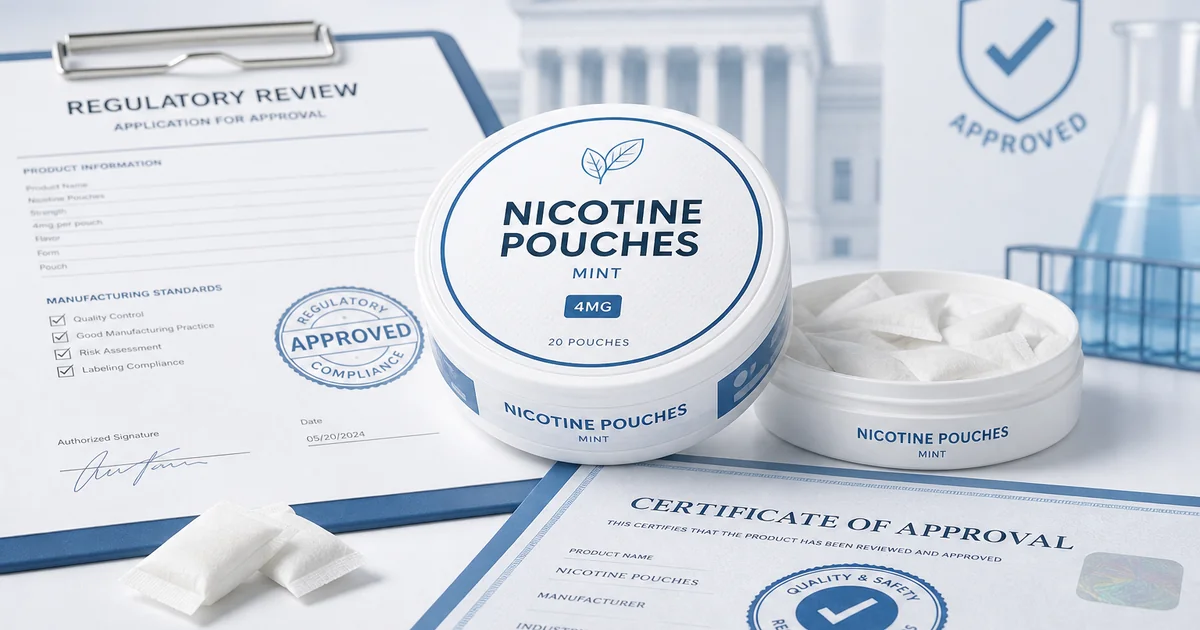
The FDA cleared Philip Morris to market ZYN as less harmful than cigarettes on June 30, 2026. If you are trying to quit nicotine pouches, this news might feel confusing. The headlines say "lower risk," but your goal is zero nicotine, not a different delivery method.
Here is the reality: the FDA approval matters for public health policy. It does not change what your body needs. Quitting remains the only way to eliminate nicotine dependence completely. This post explains what the approval actually means, why it complicates the quitting conversation, and how to stay focused on your goal.
What the FDA Actually Approved
The FDA authorized 20 ZYN products to carry a modified risk claim. The label can state that switching from cigarettes to these pouches reduces exposure to harmful chemicals. This is not the same as saying ZYN is safe. The FDA explicitly stated that all tobacco and nicotine products carry risks.
The approval applies only to marketing language. It does not change the nicotine content in pouches. It does not make quitting easier or harder. It simply allows Philip Morris to tell smokers that switching to pouches exposes them to fewer toxins than continuing to smoke.
For current ZYN users, this distinction matters. You are not the target audience for this claim. The approval addresses people who still smoke cigarettes, not people trying to leave nicotine behind entirely.
Why This News Feels Like a Mixed Signal
Quitting nicotine pouches requires clarity. You need to believe that life without nicotine is better than life with it. When a federal agency calls a product "less harmful," it can subtly undermine that belief.
I have talked to people who quit ZYN and then saw this news. Several said the same thing: "It made me wonder if I was overreacting." That doubt is the real risk. The FDA approval is about comparative harm for smokers, not absolute safety for users. But your brain might not make that distinction at 10 PM when a craving hits.
The truth is simpler than the headlines suggest. Less harmful than cigarettes still means harmful. Nicotine addiction still means dependence. Withdrawal symptoms still happen when you stop. Nothing in the FDA approval changes those facts.
The Harm Reduction Trap
Harm reduction has a valid place in public health. If a smoker switches to pouches and never returns to cigarettes, that is probably a net positive for their health. But harm reduction is not the same as cessation. It is a destination for some people and a waystation for others.
The trap appears when harm reduction becomes a reason to delay quitting. "At least I am not smoking" can morph into "I will quit eventually" indefinitely. I have seen people use ZYN for years with that logic. The FDA approval might reinforce it.
Your goal is different. You want out entirely. That requires treating ZYN as something to eliminate, not something to settle for. The approval does not make this approach wrong. It just adds noise you need to filter out.
What the Science Actually Says About Quitting
Research on nicotine cessation shows consistent patterns. The first 72 hours are the hardest physically. Cravings peak around day three. Most withdrawal symptoms fade within two to four weeks. Psychological triggers take longer but become manageable with practice.
None of this depends on FDA classifications. Your brain chemistry does not care about regulatory decisions. Nicotine binds to acetylcholine receptors regardless of what the label says. Dopamine release follows the same pattern. Withdrawal happens the same way.
The approval might actually help some quitters indirectly. If fewer people start smoking because pouches seem like a viable alternative, that is good for public health. But for you, right now, the focus stays the same: get through today without nicotine, then repeat.
How to Process This News Without Relapsing
If the FDA approval triggered cravings or doubt, that is normal. Your brain looks for excuses to return to nicotine. A news story about "lower risk" is perfect fodder for that search.
Here is how to handle it. First, separate the two conversations. The FDA decision is about population-level health policy. Your decision is about your individual freedom from addiction. Both can be true without conflicting.
Second, remember why you started quitting. Write those reasons down if you have not already. Health, money, control, family, whatever motivated you. The approval does not invalidate those reasons.
Third, talk to someone. The PouchOut app includes a community of people who faced the same headlines and stayed quit. Sometimes just hearing "I felt that too, and it passed" is enough to get through a rough evening.
The Financial Reality Check
One thing the FDA approval definitely does not change: the cost. A typical ZYN user spends between $200 and $400 monthly depending on location and usage. That is $2,400 to $4,800 yearly. Over five years, you could buy a decent used car with what you spend on pouches.
The approval does not make ZYN cheaper. It does not change the economic reality that nicotine companies profit from your dependence. Philip Morris shareholders benefit from every can you buy. You benefit from every can you do not.
If you need motivation, calculate your own numbers. Multiply your weekly spending by 52. Then multiply that by five. Look at the total. That is what staying hooked costs in dollars alone, separate from health impacts.
Practical Steps for the Next 30 Days
News cycles fade. Your quitting journey continues. Here is what to focus on while the headlines settle.
Track your cravings without judgment. Notice when they happen, what triggers them, how long they last. Most cravings peak at five minutes and fade by fifteen. Knowing this pattern helps you ride them out.
Replace the ritual, not just the substance. If you used ZYN after meals, find a new post-meal routine. Walk, brush your teeth, drink water. The habit loop needs a new endpoint.
Use support tools. PouchOut includes craving trackers, progress milestones, and community features. The app is designed specifically for nicotine pouch users, not smokers converting to other products.
Celebrate small wins. One day without nicotine matters. Three days matters more. Each milestone proves you can do this, regardless of what regulators say about the product you left behind.
FAQ
Does the FDA approval mean ZYN is safe now?
No. The approval allows ZYN to claim it exposes users to fewer harmful chemicals than cigarettes. It does not claim safety, and the FDA explicitly states all nicotine products carry risks.
Should I switch back to ZYN because of this news?
If you have already quit, switching back would restart your dependence. The approval addresses harm reduction for current smokers, not cessation for former users. Your quit is still the healthier choice.
Will ZYN become more popular after this approval?
Probably. Marketing claims matter for sales. But popularity does not change what nicotine does to your brain or body. Your decision to quit remains valid regardless of how many people start using pouches.
Does this affect nicotine pouch regulations in other countries?
Not directly. The FDA decision applies only to the United States. Other countries have their own regulatory frameworks. The EU, for example, treats nicotine pouches differently under TPD3 rules.
How do I explain my quit to people who cite this approval?
You do not owe anyone an explanation. If you want to provide one, keep it simple: "I feel better without nicotine." Your experience matters more than regulatory classifications.
Will PouchOut update its approach based on this news?
No. The app continues to support complete cessation. Harm reduction has its place in public health, but PouchOut serves people who want to eliminate nicotine entirely, not switch between products.
The Bottom Line
The FDA approval is a regulatory decision about marketing language. It is not medical advice for individuals. It is not a reason to start, continue, or resume nicotine use. It is simply a statement that, for smokers who cannot or will not quit nicotine entirely, pouches expose them to fewer toxins than cigarettes.
Your quit is about you. The headlines will change. New studies will emerge. Regulations will shift. But your goal, your health, and your freedom from dependence remain constant. Stay focused on that.
If you are ready to quit or need support staying quit, download PouchOut. The app provides tools, tracking, and community specifically designed for nicotine pouch users who want to quit completely.
Related posts: