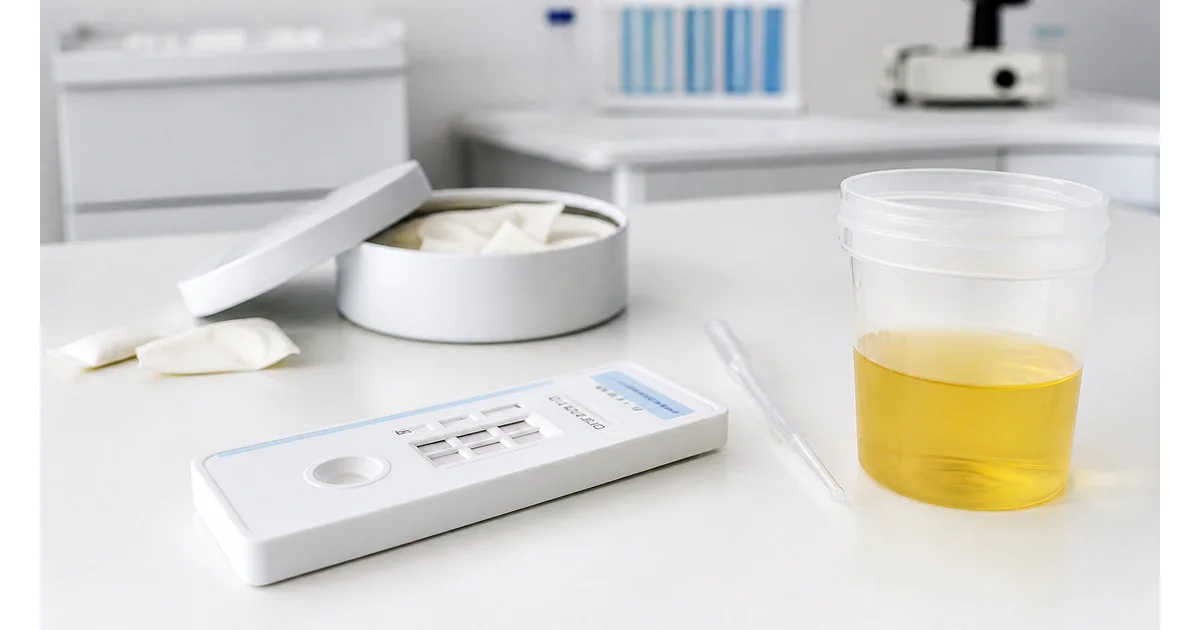
Nicotine pouches will not show up on a standard 5-panel or 10-panel drug test. These common employment screenings look for illegal substances like THC, cocaine, and opiates — not nicotine. However, specialized cotinine tests can detect nicotine use for days or even weeks after your last pouch, depending on usage frequency and body chemistry.
If you are facing a drug test for a new job or insurance screening, understanding the difference between standard panels and nicotine-specific tests matters. This guide breaks down exactly what various tests screen for, how long nicotine stays detectable in your system, and which employers actually care about nicotine use.
What Standard Drug Tests Actually Screen For
Most employers in the United States use a 5-panel drug test as their baseline screening tool. This test looks for five specific categories of substances:
- THC (marijuana)
- Cocaine
- Opiates (including heroin, morphine, and codeine)
- Amphetamines (including methamphetamine)
- PCP (phencyclidine)
Some employers opt for an expanded 10-panel test that adds:
- Benzodiazepines
- Barbiturates
- Methadone
- Propoxyphene
- Quaaludes (or additional synthetic opioids)
Notice what is missing from both lists: nicotine. Standard employment drug tests do not screen for tobacco products, vaping devices, or nicotine pouches. Nicotine is a legal substance, and unless an employer has a specific tobacco-free workplace policy, they typically do not test for it.
What Is a Cotinine Test and Who Uses It
While standard drug tests ignore nicotine, cotinine tests are specifically designed to detect it. Cotinine is the primary metabolite your body produces when breaking down nicotine. It stays in your system longer than nicotine itself, making it a more reliable marker for recent tobacco or nicotine product use.
Cotinine testing is not part of standard pre-employment drug screening. Instead, it is used in specific situations:
Health and life insurance applications. Insurers may test for cotinine to verify your non-smoker status, which affects premium rates. Smokers typically pay significantly higher premiums due to increased health risks.
Tobacco-free workplace policies. Some employers, particularly in healthcare and wellness industries, maintain strict nicotine-free hiring policies. They test for cotinine to enforce these rules.
Smoking cessation programs. Clinical programs tracking quit progress may use cotinine testing to verify abstinence.
Medical diagnostics. Doctors may order cotinine tests to determine nicotine exposure levels in patients with unexplained symptoms.
How Long Nicotine Stays in Your System
The detection window for nicotine and cotinine varies dramatically based on usage frequency, metabolism, body composition, and the type of test administered.
Urine Testing
Urine tests are the most common method for cotinine detection. For casual nicotine pouch users — defined as using less than daily — cotinine typically clears within 3 to 4 days. Heavy daily users may test positive for up to 20 days after their last pouch.
Urine testing is preferred for employment and insurance screening because it is non-invasive, cost-effective, and provides a reasonably long detection window.
Blood Testing
Blood tests detect nicotine and cotinine for a shorter period. Nicotine itself clears from blood within 1 to 3 days. Cotinine may persist slightly longer but generally follows a similar timeline.
Blood tests are less common for routine screening due to their invasive nature and shorter detection window. They are typically reserved for medical diagnostics or forensic purposes.
Saliva Testing
Saliva tests can detect cotinine for 1 to 4 days after last use. These tests are gaining popularity for workplace screening because they are easy to administer and difficult to adulterate.
The detection window is shorter than urine testing, making saliva tests less effective for identifying heavy users who have recently cut back.
Hair Testing
Hair follicle testing provides the longest detection window, potentially identifying nicotine use from up to 90 days prior. However, hair testing for nicotine is rare due to higher costs and the fact that nicotine binds less reliably to hair than many other substances.
This method is occasionally used in forensic investigations or high-stakes employment situations where long-term usage patterns matter.
Which States Allow Nicotine-Free Hiring Policies
Employers cannot discriminate based on nicotine use in every state. As of 2026, approximately 21 states have no explicit protections for tobacco users, meaning employers in those states can legally refuse to hire nicotine users or terminate employees who use nicotine products.
States with tobacco-user protections generally prohibit employers from making hiring decisions based on off-duty lawful activities, which includes tobacco use. These protections vary in strength and scope.
Major employers known for nicotine-free policies include some hospital systems, wellness companies, and certain retailers. These policies often apply to all nicotine products, including patches, gum, pouches, and vaping devices — not just traditional cigarettes.
If you are job hunting and use nicotine pouches, researching a potential employer's tobacco policy before applying can save you time and stress.
Can You Beat a Nicotine Drug Test
The internet is full of advice about flushing nicotine from your system quickly. Most of it does not work.
Drinking excessive water will not speed up nicotine metabolism. Your liver processes nicotine at a fixed rate, and hydration does not change that timeline. Overhydration before a urine test can also trigger dilution flags, requiring a retest.
Detox drinks and supplements marketed for drug tests lack scientific evidence supporting their effectiveness for nicotine. Many are expensive placebos.
Exercise and sweating do not accelerate nicotine elimination in any meaningful way. While exercise supports overall health, it will not help you pass a test scheduled for tomorrow.
The only reliable method to test negative for cotinine is to stop using nicotine products entirely and allow sufficient time for clearance based on your usage patterns.
The Real Solution: Quitting Nicotine Pouches
If you are facing a drug test or simply tired of worrying about nicotine detection, the permanent solution is quitting. Nicotine pouches may seem like a safer alternative to smoking, but they still deliver addictive nicotine that keeps you dependent.
Understanding your triggers is the first step. Many people reach for pouches during specific situations — after meals, during work breaks, or in social settings. Identifying these patterns helps you anticipate cravings and develop alternative responses.
Tracking your usage reveals habits you might not notice otherwise. You may discover you use far more pouches than you realized, or that certain times of day drive higher consumption.
Building a quit plan with clear milestones keeps you motivated. Whether your goal is passing a drug test, saving money, or improving your health, having a structured approach increases your chances of success.
FAQ
Will Zyn show up on a standard pre-employment drug test?
No. Standard 5-panel and 10-panel drug tests do not screen for nicotine or cotinine. They look for illegal drugs like marijuana, cocaine, and opiates. Only specialized cotinine tests will detect Zyn or other nicotine pouch use.
How long before a drug test should I stop using nicotine pouches?
For casual users, stopping 4-5 days before a urine test provides a safety margin. Heavy daily users should allow 3 weeks or more for complete clearance. Blood and saliva tests have shorter detection windows of 1-4 days.
Do all employers test for nicotine?
No. The majority of employers do not test for nicotine unless they have specific tobacco-free workplace policies. These policies are most common in healthcare, wellness, and some retail sectors. Approximately 21 states allow employers to maintain nicotine-free hiring policies.
What is cotinine and why do tests look for it?
Cotinine is the main metabolite produced when your body breaks down nicotine. It stays in your system longer than nicotine itself, making it a more reliable indicator of recent tobacco or nicotine product use. Cotinine tests are specifically designed to detect this metabolite.
Can secondhand smoke cause a positive cotinine test?
Extreme secondhand smoke exposure could theoretically produce detectable cotinine levels, but this is rare. Typical environmental exposure will not cause a positive test result. If you are concerned, disclose any secondhand exposure when providing your sample.
Is quitting nicotine pouches harder than quitting cigarettes?
Difficulty varies by individual. Some find pouches easier to quit because they lack the behavioral rituals associated with smoking. Others struggle because pouches are more discreet and can be used anywhere, making the habit harder to break. The physical nicotine addiction is similar regardless of delivery method