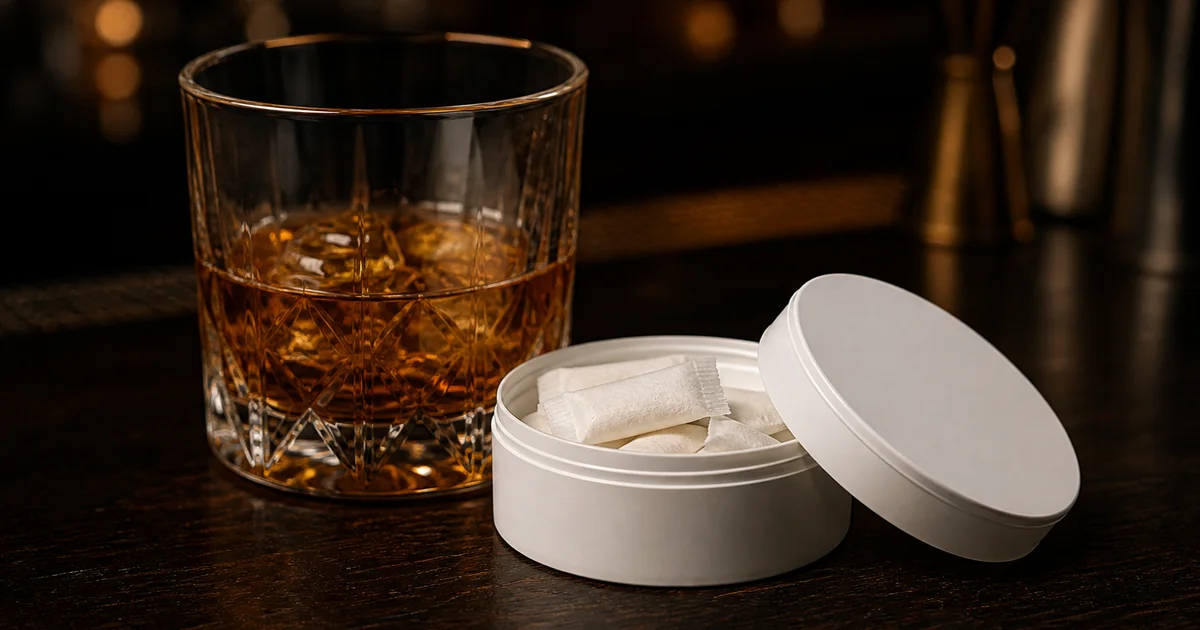
You are three drinks in at a bar with friends. You put in your first Zyn of the night, expecting the usual buzz that helps you settle into the evening. But something is off. You are not feeling it the way you normally do. Your friend offers you another drink, and you reach for a second pouch. Then a third. By the end of the night, you have gone through half a can, maybe more. You do not remember using that many. The next morning, your head is pounding, your mouth is dry, and you feel foggy in a way that pure hangovers never quite achieved. If this pattern sounds familiar, you are experiencing the specific physiological interaction between alcohol and nicotine.
The Bar Scenario: Why Pouch Consumption Accelerates
Most people who use both alcohol and nicotine pouches notice the same pattern. Moderate, controlled use during the week gives way to excessive, almost unconscious consumption during a night out. The can that should last several days disappears in a few hours. Understanding why this happens requires looking at how each substance affects the other.
Alcohol Changes Nicotine Absorption:
Alcohol is a vasodilator. It causes blood vessels to expand, increasing blood flow to tissues. Nicotine is a vasoconstrictor, causing blood vessels to narrow. You might think these effects would cancel each other out, but the interaction is more complex.
When you drink, the blood vessels in your oral mucosa dilate. This means when you place a nicotine pouch, the nicotine has access to more blood vessels and can enter your bloodstream more efficiently. The absorption rate increases, but so does the distribution throughout your body.
Paradoxically, this increased absorption does not always translate to increased perceived effect. Alcohol affects the central nervous system in ways that can blunt the subjective experience of nicotine while the physiological effects continue. You absorb more nicotine but feel it less intensely, creating a drive to use more.
The Tolerance Shift:
Alcohol temporarily alters your nicotine tolerance. The mechanisms are not fully understood, but the subjective experience is consistent across users. A pouch strength that feels adequate when sober feels weak when drunk. Your brain registers insufficient nicotine relative to the altered state alcohol creates, triggering cravings for more.
This tolerance shift is temporary. The same pouches that felt insufficient during drinking will feel normal or even strong the next day when alcohol has left your system. But during the drinking session, the mismatch drives overconsumption.
Why the Nicotine Buzz Fades Fast When Drinking
The interaction between alcohol and nicotine affects the reward pathways in your brain in ways that diminish the satisfaction from each pouch while increasing the desire for the next one.
Dopamine System Interaction:
Both alcohol and nicotine increase dopamine release, but they do so through different mechanisms. Nicotine directly stimulates nicotinic acetylcholine receptors, triggering dopamine release in the nucleus accumbens. Alcohol increases dopamine through multiple pathways, including endogenous opioid systems and GABA modulation.
When combined, the dopamine response is not simply additive. The brain's reward system becomes saturated more quickly, leading to a faster decline in the subjective pleasure from each subsequent stimulus. The first pouch of the night might feel good. The fifth feels like nothing, but you keep reaching for the can because the drive to use has become disconnected from the reward.
Impaired Judgment and Tracking:
Alcohol impairs prefrontal cortex function, reducing your ability to monitor your own behavior and make rational decisions about consumption. You lose count of how many pouches you have used. You override the internal signals that would normally tell you to slow down. The combination of increased drive to use and decreased ability to regulate creates the perfect conditions for overconsumption.
Social Context Amplification:
Drinking often occurs in social settings where Zyn use is normalized and visible. Seeing others use triggers your own cravings through social modeling. The social lubrication of alcohol removes inhibitions about frequent pouch use. What might feel excessive in a sober, solitary context feels normal in a bar with friends who are also drinking and using nicotine.
The Next-Day Comedown: Why It Hits Harder
The morning after combining alcohol and nicotine pouches is often worse than a hangover from alcohol alone. This is not imagination. It is the result of two substances leaving your system simultaneously, each contributing to the miserable state you wake up in.
Dual Withdrawal:
Alcohol withdrawal peaks as your blood alcohol level drops. Symptoms include headache, nausea, anxiety, and fatigue. Nicotine withdrawal begins as nicotine levels fall, causing irritability, difficulty concentrating, and intense cravings. When you have consumed excessive nicotine during drinking, the withdrawal is correspondingly more severe.
The combination means you are experiencing withdrawal from two addictive substances at the same time. Your body is trying to restore homeostasis in multiple neurotransmitter systems simultaneously. The result is a compounded misery that pure alcohol hangovers do not match.
Dehydration From Both Sources:
Alcohol is a diuretic, causing your body to lose fluids. Nicotine also has mild diuretic effects and can reduce saliva production. Using both together creates multiplicative dehydration. Your mouth feels like cotton. Your head pounds. Your skin looks dull. The dehydration is more severe than from equivalent alcohol consumption without nicotine.
Sleep Disruption:
Alcohol fragments sleep architecture, reducing restorative deep sleep and REM. Nicotine is a stimulant that can delay sleep onset and cause early waking. Using nicotine while drinking, especially in the hours before bed, creates compounded sleep disruption. You may fall asleep easily but wake frequently, or wake earlier than intended feeling unrefreshed.
The sleep disruption means your brain has less opportunity to clear metabolic waste products, including those from alcohol metabolism. This contributes to the cognitive fog and physical malaise of the next day.
Gastrointestinal Effects:
Both alcohol and nicotine irritate the gastrointestinal tract. Alcohol increases stomach acid production and can cause inflammation of the stomach lining. Nicotine relaxes the lower esophageal sphincter, allowing acid reflux, and affects gut motility. The combination can cause significant nausea, heartburn, and digestive discomfort the next day.
Practical Harm Reduction: Pacing and Awareness
If you choose to use nicotine pouches while drinking, several strategies can reduce the risks of overconsumption and mitigate next-day effects.
Count Your Pouches Before You Start:
Decide in advance how many pouches you will use during a drinking session, and stick to that number. Put the agreed-upon amount in a separate container and leave the rest at home. Once you are drinking, your impaired judgment will not allow you to make rational decisions about limits. The decision must be made sober and enforced mechanically.
Hydrate Between Every Drink and Every Pouch:
Dehydration is a major contributor to hangover severity. Drink a full glass of water between each alcoholic beverage and between each nicotine pouch. This slows consumption of both substances and helps maintain hydration. The pacing also gives you time to notice how you are feeling before adding more of either substance.
Choose Lower Strength:
If you know you will be drinking, consider using 3mg pouches instead of 6mg. The increased absorption efficiency when drinking means lower strength pouches may provide adequate effect while reducing total nicotine consumption. This reduces the severity of next-day nicotine withdrawal.
Set Phone Reminders:
Use your phone to track time and pouch use. Set a reminder every hour to assess how many pouches you have used. The external prompt can overcome the impaired self-monitoring that alcohol causes. Simply being forced to count can slow consumption.
Avoid Late-Night Nicotine:
Try to stop using nicotine pouches at least two hours before you plan to sleep. This reduces the stimulant effect on sleep architecture. Since alcohol already disrupts sleep, removing the additional disruption from nicotine can improve sleep quality and next-day functioning.
Eat Before and During:
Food slows alcohol absorption and provides substrate for metabolism. Eating a substantial meal before drinking and snacking throughout the evening can reduce both alcohol and nicotine effects, making overconsumption less likely and hangovers less severe.
The Pattern Recognition
For regular users of both alcohol and nicotine pouches, the drinking session pattern often reveals the extent of nicotine dependency. If you find that you cannot drink without using significantly more Zyn than usual, or if social drinking consistently leads to excessive pouch consumption, the substances have become linked in your behavioral repertoire.
This pairing is common because both substances serve similar social and psychological functions. They reduce social anxiety, provide a ritualistic activity during conversation, and offer a momentary focus during lulls in interaction. When paired repeatedly, they become associated in your brain's reward circuitry. Drinking triggers nicotine cravings not just because of the pharmacological interaction, but because of the learned association.
Breaking this association requires awareness and intentional behavior change. Some users find success in abstaining from nicotine during drinking sessions entirely, accepting that the experience will be different. Others implement strict pre-commitment strategies like the pouch-counting method described above. The goal is not necessarily total abstinence from either substance, but conscious, controlled use rather than automatic overconsumption.
The Bottom Line
Combining alcohol and nicotine pouches creates a specific risk profile that differs from using either substance alone. The interaction increases nicotine absorption while blunting subjective effects, driving overconsumption. The next-day withdrawal from both substances compounds hangover misery. The impairment of judgment makes self-regulation difficult.
If you choose to use both, harm reduction strategies can help. Pre-commit to limits, hydrate aggressively, choose lower nicotine strengths, and avoid late-night use. These practices do not eliminate risk, but they can reduce the severity of both acute overconsumption and next-day consequences.
Ultimately, the pattern of excessive pouch use during drinking is information about your relationship with nicotine. It reveals how context affects consumption and how dependency manifests in permissive environments. Understanding this pattern is the first step toward changing it.
Learn more about the nicotine withdrawal timeline and how alcohol can affect recovery, explore the connection between Zyn and brain fog, and if you are ready to break the cycle of combined use, start your journey to quit Zyn today.