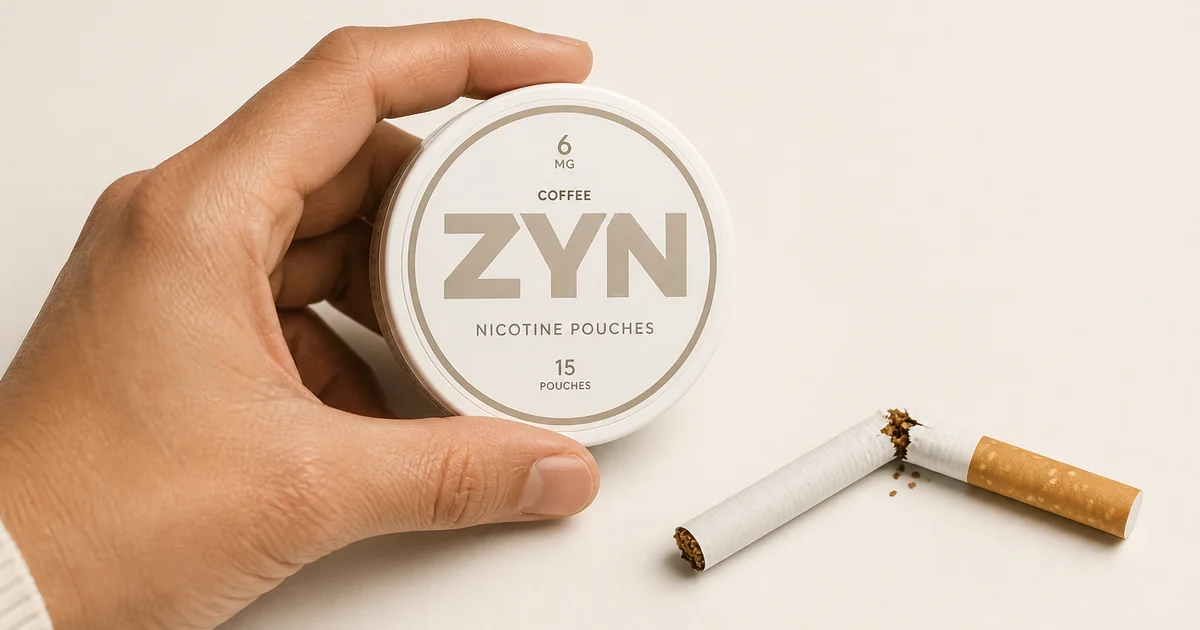
The FDA made headlines in June 2026 by authorizing ZYN to market itself as presenting lower risk than traditional cigarettes. For millions of smokers considering a switch, this sounds like validation: finally, a nicotine product that is officially recognized as safer. But here is what often gets lost in the headlines: safer than smoking is an extremely low bar to clear. Cigarettes are responsible for more than 480,000 deaths annually in the United States alone. Being less deadly than cigarettes does not make a product safe, healthy, or risk-free.
If you are currently smoking and considering a switch to ZYN, you deserve an honest assessment of what that switch actually means for your health. The truth is nuanced, and understanding those nuances matters for making informed decisions about your future.
What Smoking Actually Does to Your Body
Cigarette smoke is a toxic cocktail of more than 7,000 chemicals, including at least 70 known carcinogens. The harm comes primarily from combustion — the burning of tobacco leaf creates tar, carbon monoxide, and a host of other substances that damage virtually every organ system in your body.
The Combustion-Specific Harms:
Tar coats your lungs, destroying the tiny hair-like cilia that normally sweep mucus and debris out of your airways. Over time, this leads to chronic bronchitis, emphysema, and dramatically increased risk of lung cancer. Carbon monoxide binds to hemoglobin in your blood, reducing oxygen delivery to your heart and brain. This strain contributes to cardiovascular disease, the leading cause of death among smokers.
The cardiovascular impact is particularly severe. Smoking damages blood vessels, promotes plaque buildup, increases blood pressure, and raises heart rate. Smokers have two to four times higher risk of coronary heart disease and stroke compared to non-smokers. These effects begin with the first cigarette and accumulate over time.
Secondhand smoke extends these harms to family members, coworkers, and anyone else sharing your environment. Children exposed to secondhand smoke have higher rates of respiratory infections, asthma, and sudden infant death syndrome. This external harm is one of smoking's most tragic aspects — the damage extends beyond the person holding the cigarette.
What ZYN Does to Your Body
Nicotine pouches eliminate combustion entirely. There is no smoke, no tar, no carbon monoxide, and no secondhand exposure. This is the foundation of the FDA's modified risk determination. But nicotine pouches are not inert. They deliver nicotine, a highly addictive stimulant with its own physiological effects.
Nicotine Dependency:
Nicotine triggers dopamine release in your brain's reward pathways, creating the pleasurable sensation that drives addiction. With repeated use, your brain adapts by reducing natural dopamine production and increasing receptor sensitivity. This neuroadaptation means you need nicotine just to feel normal — without it, you experience withdrawal symptoms including irritability, anxiety, difficulty concentrating, and intense cravings.
The addiction potential of nicotine is comparable to heroin and cocaine. Most people who use nicotine products regularly become dependent. Once dependent, quitting requires overcoming both physical withdrawal and deeply ingrained behavioral habits.
Oral Health Effects:
Unlike cigarettes, which affect lungs primarily, nicotine pouches sit against your gum tissue. The alkaline pH of pouch contents can irritate oral mucosa. Regular users may experience gum recession, inflammation, and increased sensitivity. While these effects are generally less severe than smoking-related oral cancers, they are not negligible.
The long-term oral health implications of nicotine pouch use are still being studied. ZYN has only been widely available since 2019 in the United States. We do not have decades of epidemiological data showing what happens to gums after twenty years of daily pouch use. Early research suggests concerns, but definitive conclusions await longer-term studies.
Cardiovascular Impact:
Nicotine itself raises heart rate and blood pressure. While the cardiovascular risks of nicotine alone appear lower than those of smoking, they are not zero. For people with existing heart conditions, nicotine in any form may pose risks that require medical consultation.
Where ZYN Genuinely Wins vs Cigarettes
The FDA's modified risk authorization was based on solid evidence. When you eliminate combustion, you eliminate the primary mechanism of smoking-related disease.
No Tar, No Carbon Monoxide:
ZYN contains no tobacco leaf and produces no smoke. You are not inhaling tar into your lungs or exposing your blood to carbon monoxide. For respiratory and cardiovascular health, this is a meaningful improvement over smoking.
No Secondhand Smoke:
Nicotine pouches produce no secondhand exposure. Your family members, coworkers, and anyone in your vicinity are not harmed by your ZYN use. This removes one of smoking's most significant ethical and health burdens.
Reduced Cancer Risk:
While nicotine itself may have some carcinogenic properties, the risk appears substantially lower than that of smoked tobacco. The absence of combustion products eliminates exposure to the majority of tobacco-related carcinogens.
Improved Respiratory Function:
Many former smokers who switch to nicotine pouches report improved breathing, reduced coughing, and better exercise tolerance within weeks. Your lungs begin clearing themselves of accumulated tar and debris once cigarette exposure stops.
Where the Comparison Is Misleading
The "safer than smoking" framing creates a false dichotomy. It implies the choice is between cigarettes and ZYN, when the healthiest option is neither.
You Are Still Addicted:
Switching from cigarettes to ZYN maintains your nicotine dependence. You remain tethered to a substance that controls your mood, dictates your daily routines, and costs you money. The addiction does not loosen its grip just because you changed delivery methods. For many users, the behavioral addiction to ZYN becomes even stronger than it was with cigarettes.
Cigarettes have natural stopping points. You smoke one, and then you are done until you choose to light another. ZYN pouches can be used continuously, discreetly, and in situations where smoking would be impossible. The lack of social stigma and environmental restrictions means many users actually increase their nicotine intake after switching.
Oral Health Risks Are Real:
While ZYN avoids lung damage, it introduces different concerns. Gum recession and dental health effects are increasingly reported by long-term users. The alkaline pH of pouches can erode gum tissue over time. These effects may not be as dramatic as smoking-related cancers, but they are not trivial either.
Unknown Long-Term Data:
ZYN has not existed long enough for us to have lifetime use data. We know what smoking does after forty years because we have studied millions of smokers across decades. ZYN's modern formulation has only been widely used since 2019. The absence of observed long-term harm is not proof of safety — it is merely absence of data.
This uncertainty matters for young users who may continue using nicotine pouches for decades. We cannot confidently say what cumulative effects might emerge after thirty or forty years of daily use. The FDA's modified risk authorization is based on current evidence, but that evidence has inherent limitations given the product's relatively short history.
The Honest Conclusion: Switching Is Harm Reduction, Not Health Promotion
Here is the nuanced truth that gets lost in marketing claims and social media debates: switching from cigarettes to ZYN likely reduces certain health risks, particularly respiratory and cardiovascular risks associated with combustion. For a current smoker who is unable or unwilling to quit nicotine entirely, switching to nicotine pouches may be a reasonable intermediate step.
But that is not the same as saying ZYN is healthy, safe, or a good long-term choice. The goal should not be finding the safest way to stay addicted to nicotine. The goal should be freedom from addiction entirely.
The Stepping Stone vs. Destination Problem:
Many people switch from cigarettes to ZYN with the intention of eventually quitting nicotine altogether. They view the switch as a stepping stone toward complete cessation. This can work — some users do successfully taper and quit after switching.
However, a significant portion of switchers never move beyond the stepping stone. They become comfortable with ZYN, convince themselves it is safe enough, and continue using indefinitely. The switch that was meant to be temporary becomes permanent. The addiction that was supposed to end continues, just in a different form.
The Behavioral Addiction Intensifies:
Cigarette use has natural constraints. You cannot smoke indoors in most places. You cannot smoke while working, in meetings, or in social situations where smoking would be inappropriate. These constraints create natural limits on consumption.
ZYN has none of these constraints. You can use it anywhere, anytime, without anyone knowing. This invisibility removes the social friction that often helps limit addictive behaviors. Many users find themselves using ZYN more frequently than they ever smoked, maintaining higher baseline nicotine levels throughout the day.
If You Have Already Switched: What Now?
If you have already made the switch from cigarettes to ZYN, you have eliminated combustion-related risks, and that is genuinely positive. But do not stop there. Use the momentum of having quit smoking to continue toward complete nicotine freedom.
Set a Quit Date:
Treat ZYN use as temporary from the start. Set a specific date by which you will quit nicotine entirely. Having a deadline prevents the gradual slide from "stepping stone" to "permanent crutch."
Understand Your Triggers:
Pay attention to when and why you reach for a ZYN pouch. Is it stress? Boredom? Social situations? Habit? Understanding your triggers helps you develop alternative coping strategies before you attempt to quit.
Consider a Structured Program:
Quitting nicotine pouches presents unique challenges compared to quitting smoking. The behavioral patterns are different, the withdrawal timeline varies, and the social support systems designed for smokers may not address pouch-specific issues. A program designed specifically for nicotine pouch users can provide relevant guidance and support.
FAQ
Is ZYN actually safer than smoking?
Yes, based on current evidence, ZYN likely presents lower health risks than traditional cigarettes. The elimination of combustion removes tar, carbon monoxide, and thousands of other harmful chemicals found in cigarette smoke. However, "safer than smoking" does not mean "safe." ZYN still delivers addictive nicotine and may pose risks to oral health and cardiovascular function.
Can I use ZYN to quit smoking?
Some smokers have successfully used nicotine pouches as a transition tool to quit cigarettes. However, the goal should be eventual cessation of all nicotine products, not permanent substitution. If you switch to ZYN, set a timeline for quitting nicotine entirely rather than viewing ZYN as a permanent alternative.
What are the health risks of ZYN specifically?
ZYN's primary health concerns include nicotine addiction, potential gum recession and oral tissue irritation, and cardiovascular effects from nicotine stimulation. Unlike cigarettes, ZYN does not cause lung damage or expose users to combustion-related carcinogens. Long-term risks are still being studied due to the product's relatively recent introduction.
Is switching from cigarettes to ZYN considered quitting smoking?
Technically, yes — you are no longer smoking. But you are still using nicotine, still addicted, and still dependent on a substance that controls your behavior and costs you money. From a health perspective, complete nicotine cessation is the goal, not merely switching delivery methods.
How long does it take to quit ZYN after switching from cigarettes?
There is no universal timeline. Some users quit nicotine entirely within weeks of switching from cigarettes. Others remain on ZYN for years. The key is having a plan and a target date for complete cessation rather than drifting into indefinite use.
Does the FDA approval mean ZYN is safe?
No. The FDA's modified risk authorization means ZYN may present lower risk than cigarettes for adult smokers who switch completely. It does not mean ZYN is safe for non-smokers, youth, or pregnant women. It also does not mean ZYN is risk-free for adult users.
Will my lungs heal if I switch from cigarettes to ZYN?
Most former smokers experience improved respiratory function after quitting cigarettes, regardless of whether they use nicotine replacement products. Cilia in the lungs begin recovering within days to weeks, leading to improved mucus clearance and reduced coughing. These benefits occur because you stopped smoking, not because you started using ZYN.
The Bottom Line
The FDA's modified risk authorization for ZYN reflects genuine scientific evidence: for a current smoker who cannot or will not quit nicotine entirely, switching to nicotine pouches likely reduces certain health risks. This is harm reduction, and harm reduction has value.
But harm reduction is not the same as health promotion. The healthiest choice is not finding the least harmful way to use nicotine. The healthiest choice is quitting nicotine entirely and reclaiming the freedom that comes with being addiction-free.
If you are currently smoking, switching to ZYN may be a reasonable intermediate step. But do not let that step become your destination. Use the momentum, build on the progress, and keep moving toward complete nicotine freedom. Learn more about the FDA's ZYN marketing authorization, understand ZYN's effects on oral health, explore cardiovascular considerations, review the withdrawal timeline, and when you are ready, start your journey to quit ZYN entirely.
Source: FDA Modified Risk Tobacco Product Authorization for ZYN, June 2026