Nicotine is a stimulant that raises adrenaline, blood pressure, and heart rate. Stimulants are a recognized contributing factor to bruxism, the involuntary jaw clenching and teeth grinding that many people experience without realizing it. If you use ZYN or other nicotine pouches and have been told you grind your teeth at night, or you wake up with unexplained jaw soreness or morning headaches, the connection may not be obvious, but it is worth examining.
When Your Dentist Sees Something You Do Not
Picture this scenario. You are at a routine dental checkup, expecting nothing more than a cleaning and maybe a reminder to floss more. Instead, your dentist leans back and asks if you have been under stress lately. They point to visible wear patterns on your molars, enamel that has been ground down in ways that suggest persistent clenching or grinding. You are confused. You do not feel particularly stressed. Your job is fine, your sleep seems okay, and you cannot recall ever grinding your teeth.
What your dentist is seeing is bruxism, and it often goes completely unnoticed by the person doing it. Bruxism can occur while awake or asleep, and many people are unaware they do it, especially during sleep. The grinding happens involuntarily, often in short bursts throughout the night, leaving you with symptoms you might attribute to other causes: jaw pain, morning headaches, facial fatigue, or that peculiar soreness in your temples that no amount of coffee seems to fix.
The missing piece in this scenario, the one your dentist probably will not ask about unless you bring it up, is your nicotine habit. Nicotine pouches like ZYN deliver a concentrated dose of a powerful stimulant directly into your system. While most people associate stimulants with energy and alertness, they also activate the sympathetic nervous system in ways that can manifest as physical tension, including in the jaw muscles.
Why Nicotine Specifically Contributes to Jaw Clenching
To understand the connection, it helps to think about what nicotine actually does in your body. Nicotine mimics acetylcholine, a neurotransmitter involved in muscle activation and arousal. When you use a nicotine pouch, you are essentially sending a signal to your nervous system that says stay alert, stay ready. Your heart rate increases, your blood pressure rises, and your muscles enter a state of heightened readiness.
This is useful if you are trying to stay awake during a long drive. It is less useful when you are trying to sleep. For people who use nicotine pouches throughout the day and especially in the evening hours, that stimulant effect does not simply switch off when you go to bed. Your nervous system remains in a partially activated state, and for some people, that activation expresses itself through the masseter muscles, the powerful jaw muscles responsible for chewing and clenching.
This mechanism is distinct from stress-only bruxism. Many people grind their teeth during periods of intense psychological stress, and that is a well-documented phenomenon. But nicotine-induced bruxism can occur even when you do not feel stressed at all. You might be perfectly relaxed mentally while your nervous system, still responding to the stimulant in your bloodstream, keeps your jaw muscles partially engaged throughout the night.
Why This Often Goes Unnoticed
The insidious thing about sleep bruxism is that it happens while you are unconscious. You cannot feel yourself doing it. Your partner might hear the grinding, a sound like stones rubbing together, but many grinders do so silently or with minimal noise. The only evidence is what remains in the morning: that dull ache in your jaw, the headache that seems to start behind your eyes, the feeling that you chewed something tough all night even though you ate nothing after dinner.
Because these symptoms are nonspecific, people attribute them to all sorts of causes. You might think you slept in a weird position, or that you are coming down with something, or that you need a better pillow. The idea that your ZYN habit, which you use for relaxation or focus during the day, could be causing physical tension at night simply does not occur to most people. Nicotine is not the first thing anyone associates with jaw pain.
This is compounded by the fact that bruxism often develops gradually. You do not go from no grinding to severe grinding overnight. The wear on your teeth accumulates slowly, the morning symptoms creep in over months, and by the time a dentist points out the damage, you may have been grinding for years without knowing it.
The Difference Between Bruxism and Gum Recession
It is worth clarifying that what we are discussing here is entirely separate from another common side effect of nicotine pouch use: gum recession. Gum recession relates to tissue irritation from pouch placement, where the nicotine and other chemicals in the pouch cause localized damage to the gum tissue where the pouch sits. This is a chemical and mechanical irritation of soft tissue.
Bruxism, by contrast, is a neuromuscular phenomenon. It involves the jaw muscles and the temporomandibular joint, the hinge that connects your jaw to your skull. While both conditions can cause oral discomfort and both can be associated with nicotine pouch use, they have different mechanisms, different symptoms, and different solutions.
Gum recession shows up as exposed root surfaces, sensitivity to hot and cold, and visible changes in your gumline where you place pouches. Bruxism shows up as worn tooth enamel, jaw pain, headaches, and in some cases contributes to temporomandibular joint dysfunction. You can have one without the other, or both simultaneously, but treating them requires understanding which condition you actually have.
If you are experiencing gum issues related to pouch placement, you may want to read our guide on ZYN gum recession and dental health. The advice there complements what follows but addresses a different problem.
The Connection to TMJ Dysfunction
Temporomandibular joint disorders, commonly called TMJ or TMD, represent a broader category of jaw problems that can include pain, clicking or popping sounds when opening the mouth, limited range of motion, and chronic facial discomfort. While the exact causes of TMJ disorders are complex and multifactorial, chronic bruxism is a recognized contributing factor.
When you clench or grind your teeth regularly, you are putting excessive stress on the temporomandibular joint and the surrounding muscles. Over time, this can lead to inflammation, muscle fatigue, and changes in how the joint functions. TMJ disorders are estimated to affect a large number of Americans, with women aged 20 to 40 most commonly affected.
The relationship between nicotine use and TMJ is not as direct as the relationship between nicotine and bruxism, but the pathway is clear: if nicotine contributes to bruxism, and bruxism contributes to TMJ dysfunction, then nicotine use may be an upstream factor in a cascade that ends with chronic jaw problems. This is particularly relevant for people who already have some tendency toward jaw tension or who have been told they are at risk for TMJ issues.
What to Actually Do About It
If you suspect your nicotine pouch use might be contributing to jaw clenching, teeth grinding, or related symptoms, there are several practical steps you can take.
First, mention your nicotine pouch use to your dentist if you have been diagnosed with bruxism. Most dental professionals are familiar with the general effects of nicotine on oral health, but they may not specifically ask about pouch use unless you bring it up. Knowing that you use a stimulant regularly helps them understand the full picture of what might be driving your grinding.
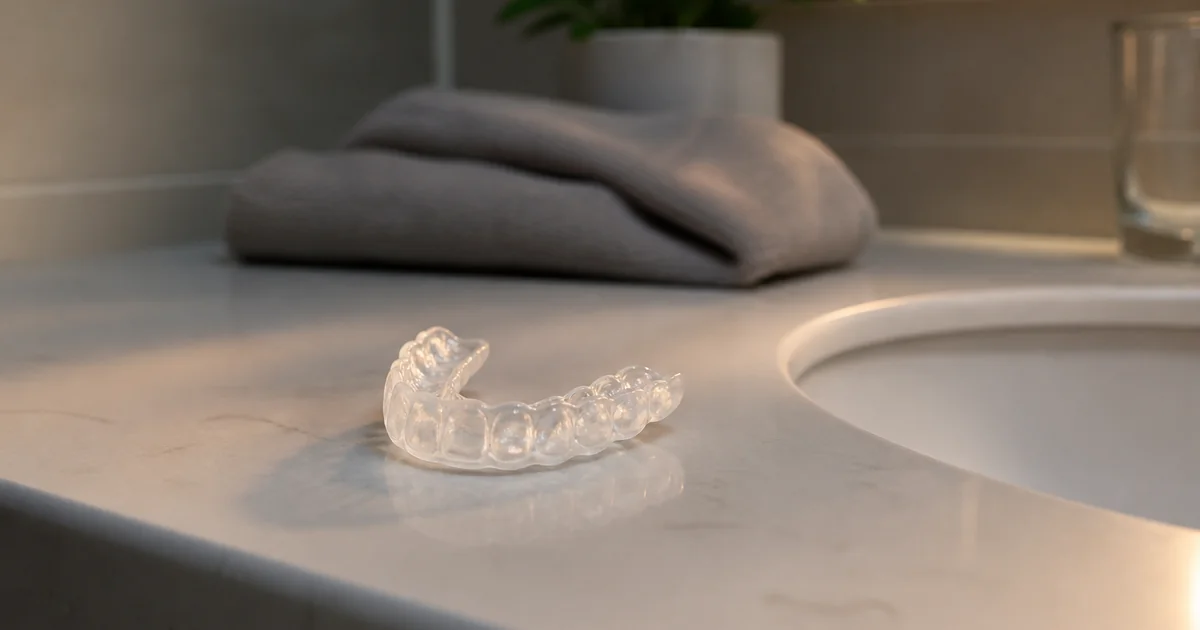
Second, consider a night guard if you do not already have one. Standard treatment for bruxism includes wearing a night guard or mouth guard to protect teeth during sleep. A properly fitted night guard creates a physical barrier between your upper and lower teeth, preventing the grinding motion from wearing down your enamel. It also slightly separates the jaw, which can reduce muscle tension in some people. Your dentist can fit you for a custom guard, or you can try an over-the-counter boil-and-bite version if you want to start with something less expensive.
Third, and most importantly, recognize that reducing your nicotine use may reduce symptom severity. This is not a guarantee, every person responds differently, and some people may continue to experience bruxism even after quitting. But because nicotine is a known stimulant that contributes to muscle tension, lowering your intake or quitting entirely removes one significant variable from the equation.
If you are experiencing headaches along with jaw symptoms, you may also find our article on ZYN headaches and migraine relief relevant. Headaches and jaw tension often travel together, and addressing one can sometimes help with the other.
Tracking Your Symptoms
One useful approach is to keep a simple log for a few weeks. Note when you use nicotine pouches, how many you use, and what time of day your last pouch is. Then note your morning symptoms: jaw soreness, headache presence and intensity, any observations from a sleep partner about grinding noises. Over time, patterns often emerge. Some people notice that heavy use days correlate with worse mornings. Others find that cutting off nicotine after a certain hour reduces their symptoms noticeably.
This kind of self-monitoring serves two purposes. It gives you data to work with when discussing options with your dentist or doctor, and it helps you understand your own patterns in a concrete way rather than relying on general impressions.
When to Seek Professional Help
While occasional jaw tension is common and not necessarily concerning, certain symptoms warrant professional evaluation. If you experience persistent jaw pain that interferes with eating or speaking, locking of the jaw joint, significant changes in your bite, or severe headaches that do not respond to over-the-counter medication, consult a dentist or oral health specialist. These could indicate more significant TMJ dysfunction that requires targeted treatment.
Similarly, if you have been using nicotine pouches heavily and are considering quitting, be aware that withdrawal can sometimes temporarily increase tension and irritability. Having a plan in place, whether that involves gradual reduction, support from an app like PouchOut, or guidance from a healthcare provider, can help you navigate the transition more smoothly.
The Bigger Picture
The connection between nicotine pouches and bruxism is not widely discussed, which is part of why it catches people off guard. We tend to think of nicotine as affecting our lungs or our cardiovascular system, or perhaps our gums if we have heard about recession risks. The idea that it could be making us clench our jaws while we sleep is not intuitive. But the physiology is straightforward: stimulants activate the nervous system, activated nervous systems can express themselves through muscle tension, and the jaw muscles are particularly prone to this kind of expression.
Understanding this connection empowers you to make informed decisions about your health. Whether that means cutting back, quitting entirely, investing in a night guard, or simply having a more informed conversation with your dentist, the first step is recognizing that the link exists. Your jaw pain might not be random, and it might not be solely stress-related. It might be your body responding to a stimulant you use every day, and that is something you have the power to change.
Ready to take control of your nicotine use? Download PouchOut and start tracking your progress, managing cravings, and building a quit plan that works for your life.
Frequently Asked Questions
Can nicotine pouches really cause teeth grinding?
Nicotine is a stimulant that raises adrenaline and activates the nervous system. Stimulants are a recognized contributing factor to bruxism, which includes both jaw clenching and teeth grinding. While not everyone who uses nicotine pouches will develop bruxism, the physiological mechanism is well established.
How do I know if I am grinding my teeth at night?
Common signs include waking up with jaw soreness, morning headaches, facial fatigue, and worn tooth enamel that your dentist may point out. Many people who grind at night have no awareness of doing so and only learn about it during dental examinations.
Is jaw clenching from ZYN different from gum recession?
Yes, these are distinct issues. Gum recession results from tissue irritation where the pouch sits against your gums. Jaw clenching and bruxism are neuromuscular issues related to how nicotine affects your nervous system and muscle tension. They require different approaches.
Will quitting ZYN stop my teeth grinding?
Reducing or quitting nicotine may reduce symptom severity for some people, since removing the stimulant eliminates one contributing factor. However, bruxism can have multiple causes, and some people may continue to experience grinding even after quitting.
What is the best treatment for bruxism?
Standard treatment includes wearing a night guard or mouth guard to protect teeth during sleep. Your dentist can provide a custom-fitted guard. Additionally, reducing stimulant use, managing stress, and addressing any underlying sleep issues can help.
Can bruxism lead to TMJ problems?
Yes, chronic bruxism can contribute to temporomandibular joint dysfunction over time. The repeated stress on the jaw joint and surrounding muscles can lead to inflammation, pain, clicking sounds, and limited jaw movement.
Should I tell my dentist about my ZYN use?
Yes, mentioning your nicotine pouch use helps your dentist understand potential contributing factors to any oral health issues you are experiencing, including bruxism, gum recession, or other concerns.