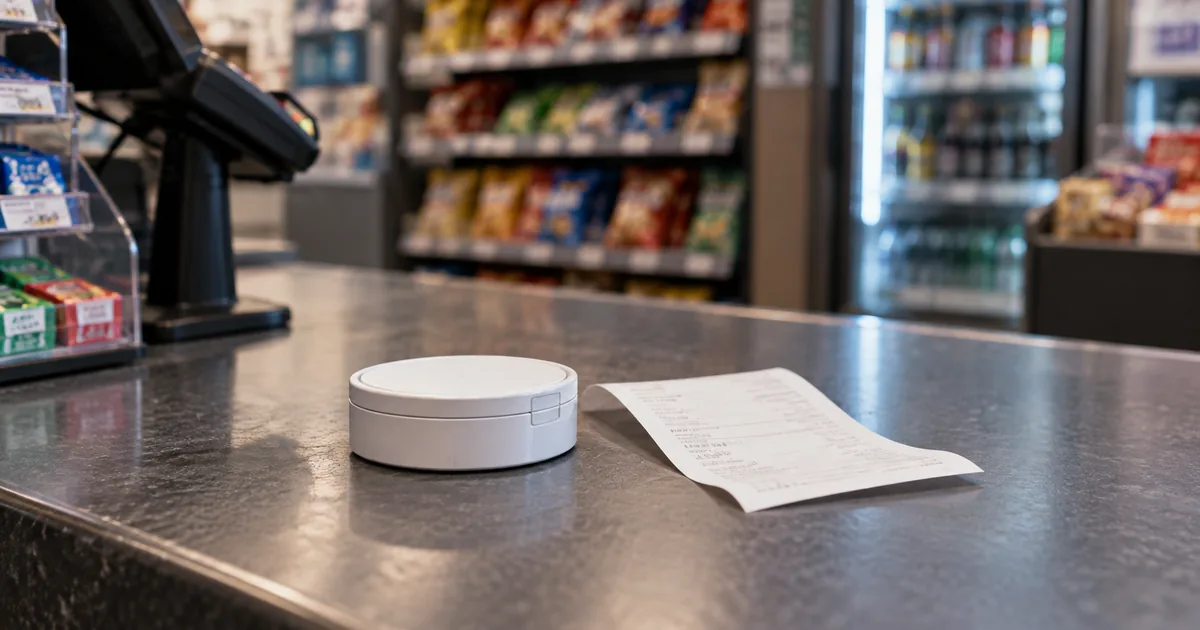
A free can of ZYN is not a neutral sample. It removes the price decision at exactly the moment someone is already buying nicotine. A 2026 paper in Tobacco Control documented a September 2025 promotion in which some adult customers received a free ZYN can when buying another tobacco or nicotine product. Scanner data showed unit sales rising while sales dollars fell during the promotion, a pattern consistent with free distribution.
The useful question is not whether free works
Of course free products get taken. The better question is what happens to the decision around them.
Someone who planned to buy cigarettes, smokeless tobacco, or another nicotine product could leave with an additional format they had not intended to purchase. The first trial no longer required a separate price comparison or a deliberate choice to seek out nicotine pouches. The offer made the pouch part of an existing checkout routine.
That is different from discovering ZYN through a health search, comparing nicotine pouches with dip, or deciding to switch away from smoking. The same can may be present in all three situations, but the reason it entered the routine is different.
What the 2026 paper examined
The paper, titled "Pushing the US nicotine pouch market," was published online by Tobacco Control in February 2026. Its authors combined retail observations with Nielsen convenience-store scanner data around the September 2025 campaign.
The promotion offered a free can of ZYN with the purchase of any tobacco or nicotine product at specified retail partners. The researchers documented promotional signs and examined sales in four-week periods surrounding the campaign.
During the period that overlapped with the offer, ZYN unit sales increased while sales revenue decreased. The authors described that pattern as consistent with cans being distributed free. Their study is an analysis of a particular campaign and market period. It does not show what every recipient did next, and it does not prove that every extra can created a long-term user.
That limit matters. A sales chart can show movement at the register. It cannot diagnose dependence in an individual.
Why units up and dollars down is the revealing detail
Ordinarily, selling more cans should bring in more sales revenue. A free-can promotion breaks that relationship. More units can leave stores even while the amount paid for the brand drops.
This makes unit volume a poor stand-in for deliberate consumer demand during the campaign. Some cans represented a normal purchase. Others were an add-on triggered by the offer. Looking only at the number of cans would mix those two paths together.
The distinction also helps explain why headline sales-growth figures need context. Growth may include repeat purchases, new adult customers, wider availability, new strengths, discounts, and promotions. One number cannot tell you which mechanism mattered most.
The checkout moment changes the choice
Retail promotions work in a compressed setting. There is little time to consider dose, current nicotine intake, or whether adding another format fits a larger goal. A person may accept the can because it costs nothing and decide what to do with it later.
For someone already using nicotine, that can create an unplanned experiment. The pouch might be used where smoking or vaping is inconvenient. It might become attached to driving, work, travel, or indoor situations. Convenience can then give the new format its own cues.
This is one reason psychological and physical nicotine dependence are worth separating. The nicotine reinforces use, while context teaches when to reach for it. A free trial can introduce both without requiring a planned brand switch.
A free can does not answer the risk question
The US Food and Drug Administration authorized the marketing of specific ZYN products in January 2025 after reviewing evidence that they contain substantially lower amounts of harmful constituents than cigarettes and most traditional smokeless tobacco products. The agency also stated that authorization does not mean the products are safe or FDA approved.
That product comparison should not be twisted in either direction. A nicotine pouch does not expose a user to combustion. It still contains addictive nicotine. Someone who completely switches from cigarettes may be making a different risk decision from someone who never used nicotine and accepts a free can.
Our ZYN versus smoking guide explains that difference. The relevant comparison is not "free versus paid." It is the person's current use, the product they might replace, and whether they will switch completely or add another product.
Trial can become dual use
The promotion was tied to the purchase of another tobacco or nicotine product. That makes dual use an obvious practical concern, even though the study did not follow individual recipients over time.
Adding pouches without reducing the original product can increase the number of situations in which nicotine is available. A cigarette user may smoke outdoors and use pouches indoors. A vaper may keep a can for flights or meetings. The format solves a convenience problem while leaving the original routine intact.
If that sounds familiar, count use across every format for one week. Include cigarettes, vape sessions, pouches, lozenges used outside a treatment plan, and any other nicotine source. The goal is not to force unlike products into a fake one-to-one conversion. It is to see whether the new format replaced anything or simply filled previously nicotine-free gaps.
The guide to how much ZYN may be too much offers a symptom and pattern check without pretending there is one safe daily number for everyone.
How to evaluate a promotion before accepting it
Pause at the register and ask four plain questions:
- Did I intend to try this product before I saw the offer?
- Am I replacing another nicotine product or adding to it?
- What strength is the free can, and how does it compare with what I use now?
- What will I do with the can if I decide it does not fit my plan?
The second question is the most important. A switch and an addition can look identical at checkout. Their effect on the weekly pattern may be completely different.
If you accept the product, do not treat "free" as permission to ignore the label. Check the nicotine strength, keep it away from children and pets, and stop using it if you develop concerning symptoms. The nicotine-strength guide explains why milligrams matter more than the price printed on a receipt.
If the free can restarted a habit
A lapse does not require a dramatic reset. Remove the remaining pouches, identify where the first use happened, and decide what you will do in that setting next time. The checkout counter, commute, work break, or evening drink may be the cue that needs a replacement.
If you had already quit, use the relapse and craving guide to distinguish a brief lapse from a return to the old routine. If you are still using several formats, start by choosing one clear outcome: complete switching away from combustion under appropriate guidance, or a plan to stop nicotine altogether.
People who want to stop pouches can use the day-by-day withdrawal timeline to prepare for the first week. A structured plan is more useful than trying to compensate for a marketing-driven trial with shame.
What the study can and cannot tell us
The paper gives a credible view of the campaign's retail footprint. It documents signage, timing, and a sales pattern consistent with free cans entering the market. It also shows why promotional volume should not be interpreted as pure demand.
It cannot tell us how many recipients were first-time pouch users, how many switched completely from another product, or how many continued using ZYN. Those would require individual follow-up data.
The conclusion is narrow but useful: removing price and attaching ZYN to an existing nicotine purchase increased the number of cans moving through stores. Put the missing decision back in. Decide what role, if any, the pouch has in your nicotine plan before the free can creates a routine of its own.
Frequently asked questions
Did ZYN really give away free cans?
The 2026 Tobacco Control paper documented a September 2025 promotion at specified retail partners. Adult customers buying another tobacco or nicotine product could receive a free can of ZYN. Retail observations and scanner data were consistent with free distribution during the campaign period.
Did the promotion prove that more people became addicted?
No. The study examined retail promotion and sales patterns, not long-term outcomes for individual recipients. It showed more units moving while sales dollars fell. It did not establish how many people became regular users, switched products, used both, or stopped after sampling.
Is a free ZYN can safer than a free pack of cigarettes?
Price does not determine health risk. Authorized ZYN products contain substantially lower amounts of harmful constituents than cigarettes, according to the FDA, but they still contain addictive nicotine and are not safe. The person's prior use and whether they switch completely or add a product also matter.
What if I use ZYN only where I cannot smoke?
That pattern is dual use, not complete switching. It can extend nicotine use into settings that were previously nicotine-free. Track all products for a week and discuss cessation or harm-reduction options with a qualified clinician if you need help choosing a safer, realistic plan.
Should I throw away a promotional can if I am quitting?
If keeping it makes use more likely, removing it is a practical choice. Store or dispose of pouches safely so children and pets cannot reach them. Then plan for the cue that made the offer appealing, such as a commute, work break, or fear of withdrawal.
Can PouchOut help with a promotion-triggered lapse?
PouchOut can help you log the lapse, reset your quit date if needed, track cravings, and rebuild a plan around the situations that trigger pouch use. The point is not to punish one decision. It is to prevent one free can from quietly becoming the next repeated purchase.
This article is general information, not medical advice. Seek urgent help for severe nicotine-poisoning symptoms, and contact a clinician or poison-control service for case-specific guidance.