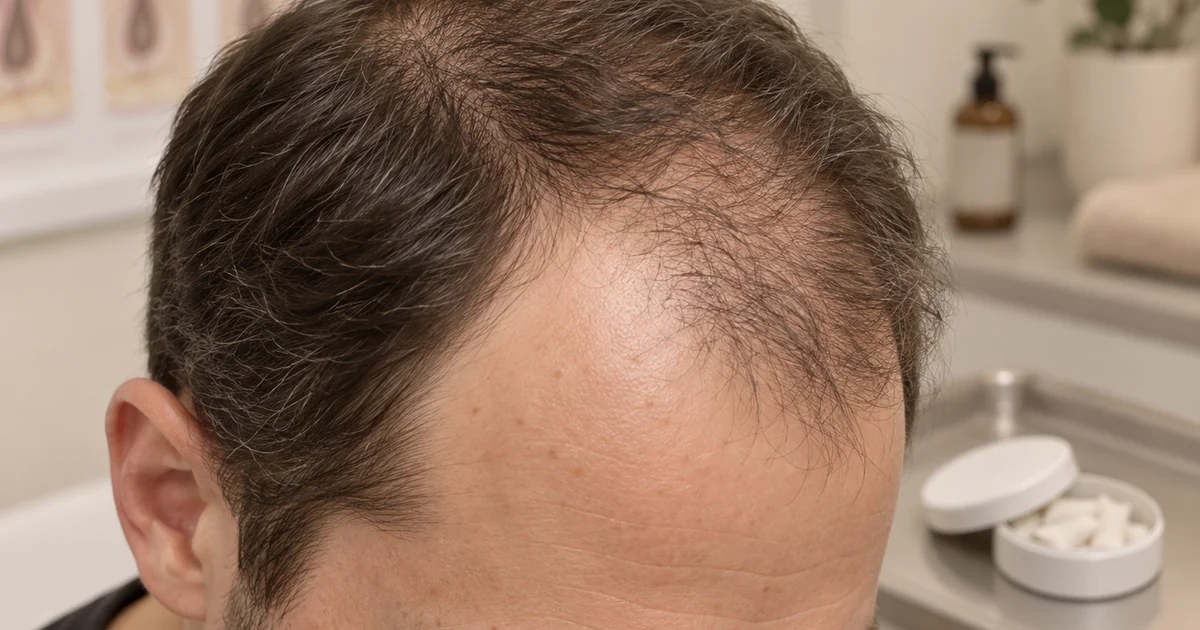
Nicotine pouches like ZYN can contribute to hair thinning and scalp health decline by constricting blood vessels that feed hair follicles. While one pouch won't make you bald, regular use creates a slow chokehold on the tiny capillaries your scalp depends on. The result is gradual: weaker strands, slower growth, and a scalp that gets less of what it needs to maintain healthy hair. Quitting restores circulation, though visible improvement takes months.
Why Hair Loss Gets Blamed on Everything Except Nicotine
When people notice more hair in the shower drain or a widening part, the mental checklist usually goes like this: stress at work, maybe not enough protein, genetics from Dad's side, possibly that new shampoo. Nicotine rarely makes the list.
This blind spot makes sense. Hair loss is slow. It happens over months and years. By the time you notice, you've already forgotten what your baseline looked like. And nicotine pouches don't come with a warning label about follicle health. The connection is invisible until someone points it out.
The irony is that nicotine's effect on hair is actually one of its more direct physical mechanisms. It is not some vague toxin accumulating in your liver. It is a vasoconstrictor that narrows blood vessels everywhere, including the ones threading through your scalp.
How Nicotine Chokes Hair Follicles
Your scalp contains about one hundred thousand hair follicles, each with its own blood supply. These tiny vessels deliver oxygen, amino acids, vitamins, and minerals that follicles need to produce keratin, the protein that makes up hair.
Nicotine binds to receptors in blood vessel walls, triggering constriction. This reduces blood flow to peripheral tissues, including the scalp. Less blood flow means:
- Reduced oxygen delivery to follicle cells
- Lower nutrient availability for keratin production
- Slower removal of metabolic waste products
- Gradual miniaturization of follicles over time
Follicles do not die immediately. They shrink. They produce thinner, weaker strands. The growth phase shortens. This is the same pattern seen in androgenetic alopecia, the most common form of hair loss, except the trigger here is vascular rather than hormonal.
The Difference Between Smoking and Pouches
Cigarette smoke contains thousands of chemicals, many of which independently damage hair. Carbon monoxide reduces oxygen carrying capacity. Polycyclic aromatic hydrocarbons disrupt the hair growth cycle. Tar compounds clog pores and irritate the scalp.
Nicotine pouches eliminate most of these additional insults. There is no smoke, no tar, no carbon monoxide. But the nicotine remains, and nicotine alone is enough to cause vasoconstriction. The question is whether pouch-level nicotine exposure produces the same scalp effects as smoking-level exposure.
The honest answer is that direct research on nicotine pouches and hair loss does not exist yet. The products are too new for long-term studies. What we do know comes from research on nicotine in other forms, including smoking, vaping, and smokeless tobacco. The vascular mechanism is consistent across all delivery methods.
What Users Actually Report
Online forums and social media show a growing pattern of ZYN users connecting their habit to hair changes. Common descriptions include:
- Increased shedding during daily brushing
- Noticeably thinner ponytails or part lines
- Slower hair growth between cuts
- Scalp dryness or tightness
- Reduced hair texture and shine
These reports are anecdotal, not clinical data. But they cluster around a consistent timeline: users who have been on pouches for one to three years notice changes that did not exist before. The pattern is strong enough that "Zyns and Hair Loss" has become a trending topic on TikTok, with users sharing before-and-after photos from their quit journeys.
Why Men Notice It First
Male pattern baldness gets blamed on genetics and dihydrotestosterone, and both play major roles. But nicotine can accelerate the timeline. A man genetically programmed to start thinning at forty might see noticeable changes in his mid-thirties if he uses nicotine regularly.
The mechanism is additive. DHT shrinks follicles from the hormonal side. Nicotine shrinks them from the vascular side. Together they create a faster slide toward visible balding. Men who quit smoking sometimes report that their hair loss slows even without other treatments, suggesting that removing the vascular stressor gives follicles a better chance.
Women and Nicotine-Related Thinning
Women experience hair loss differently. Instead of receding hairlines and crown balding, they tend toward diffuse thinning across the entire scalp. This makes the cause harder to pinpoint because there is no obvious pattern.
Female users of nicotine pouches may notice:
- A wider part that seems to grow over months
- More scalp visibility when hair is wet
- Reduced volume that styling products cannot fix
- Increased breakage and shorter maximum length
Because women's hair loss has many potential triggers, including hormonal shifts, iron deficiency, and thyroid issues, nicotine often gets overlooked. But for women using pouches daily, the vascular effect is a real and modifiable factor.
The Timeline: When Changes Show Up
Hair grows in cycles. Each follicle spends two to seven years in the active growth phase, then rests for a few months before shedding and restarting. This means that any change in follicle health takes months to become visible.
For nicotine-related thinning, the typical timeline looks like this:
- Months one to six: No visible change. Blood flow reduction is happening at the microscopic level.
- Months six to twelve: Subtle changes in texture and shedding. You might not connect them to nicotine yet.
- Year one to two: Noticeable thinning becomes hard to ignore. The part looks wider. The ponytail feels smaller.
- Year two plus: Progressive miniaturization continues. Individual strands get finer. The scalp becomes more visible.
Quitting works on the same delayed timeline. Circulation improves within days, but follicles need time to cycle back to healthier growth. Most people who quit report seeing changes in hair quality around the three to six month mark, with more significant improvement by month twelve.
What Actually Helps Hair Recovery After Quitting
Stopping nicotine is the single most important step. Beyond that, several habits support scalp recovery:
Scalp massage increases blood flow mechanically. Five minutes daily with fingertips or a soft brush stimulates circulation without irritating the skin.
Nutrient density matters because follicles are rebuilding. Focus on protein, iron, zinc, and biotin-rich foods. Eggs, leafy greens, nuts, and lean meats provide the building blocks for keratin synthesis.
Gentle handling reduces breakage while hair is in its recovery phase. Avoid tight hairstyles, harsh chemicals, and excessive heat styling.
Patience is non-negotiable. Hair grows roughly half an inch per month. You are not going to see dramatic changes in weeks. But the direction matters more than the speed.
When to See a Dermatologist
If you have quit nicotine for six months and still see progressive thinning, a dermatologist can evaluate other causes. Blood tests can check for thyroid dysfunction, iron deficiency, and hormonal imbalances. A scalp examination can identify patterns that suggest androgenetic alopecia rather than nicotine-related thinning.
Treatments like minoxidil, finasteride, or platelet-rich plasma therapy may be appropriate depending on the underlying cause. The key is getting an accurate diagnosis rather than guessing.
FAQ
Can ZYN directly cause baldness?
ZYN does not directly kill hair follicles. It reduces blood flow to the scalp, which can accelerate thinning and miniaturization over time. Whether this progresses to visible baldness depends on genetics, duration of use, and other factors.
Will my hair grow back if I quit ZYN?
Many users report improved hair texture, reduced shedding, and faster growth after quitting. Full recovery depends on how long you used nicotine and whether other factors are also contributing to hair loss.
How long after quitting will I see hair improvements?
Most people notice initial changes in hair quality around three to six months after quitting. More significant improvement typically appears by the twelve month mark as follicles complete a full growth cycle.
Is nicotine worse for hair than smoking?
Smoking contains additional chemicals that independently damage hair, so cigarettes are likely worse overall. But nicotine alone causes vasoconstriction that affects scalp circulation, so pouches are not risk-free for hair health.
Can using ZYN occasionally still affect my hair?
Occasional use carries lower risk than daily use. But nicotine's vasoconstrictive effect happens with every dose. The cumulative impact depends on frequency, strength, and individual sensitivity.
Are there any hair products that counteract nicotine's effects?
No topical product can fully counteract reduced blood flow. The most effective approach is removing the cause by quitting nicotine. Scalp massage and good nutrition support recovery but do not replace circulation.
Related Articles
- ZYN and cardiovascular health
- ZYN and skin health
- ZYN and stress
- How to quit ZYN
- ZYN withdrawal timeline
- ZYN and dehydration
- Reasons to quit ZYN
- Quit nicotine pouches app
If you are ready to quit ZYN and support your scalp health, download PouchOut for a structured quit program that tracks your progress day by day.