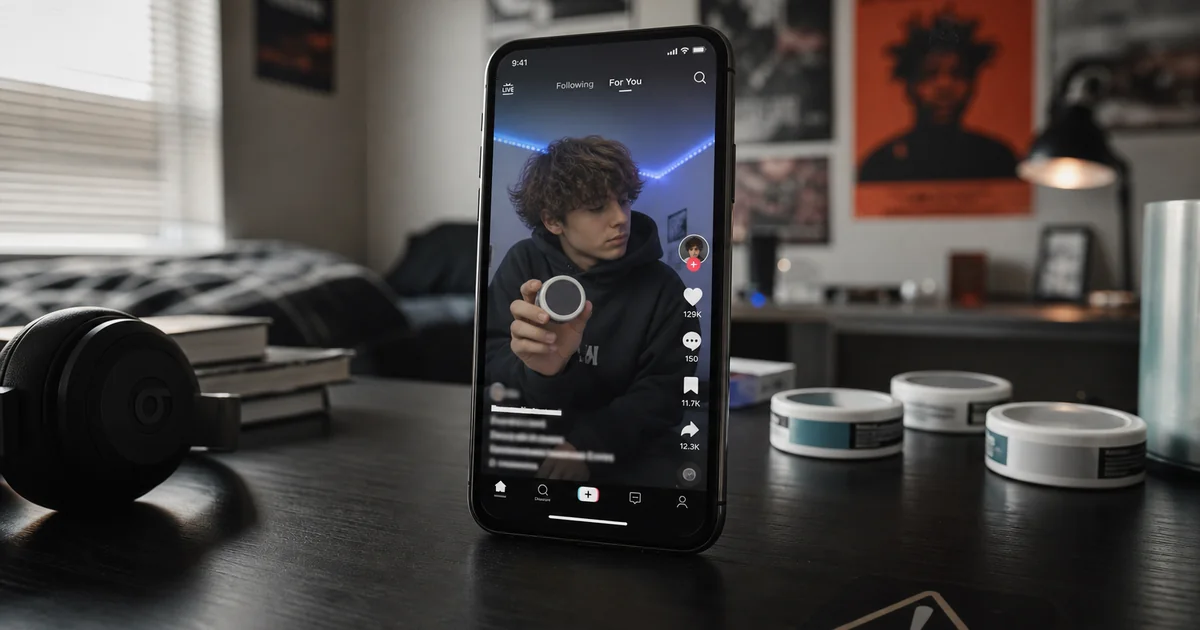
ZYN's FDA approval happened the same week 19 state attorneys general demanded Formula 1 drop their nicotine pouch sponsorship. That timing wasn't a coincidence. It was a collision. While regulators debated whether ZYN could market itself as a "reduced risk" product, teenagers were already watching their favorite creators casually pop pouches in TikTok videos that looked nothing like traditional advertising.
The disconnect is the story. Health authorities see nicotine pouches through the lens of harm reduction for adult smokers. But on social media, ZYN isn't being sold as a quitting tool. It's being sold as a lifestyle accessory, and the teenage brain is uniquely wired to buy it.
The TikTok Marketing Machine Nobody Talks About
Search "ZYN" on TikTok and you'll find something strange. No official ZYN account running sponsored ads. No obvious corporate messaging. Instead, there's an endless stream of what looks like organic content: gym bros throwing a can into frame before a workout, gamers keeping a pouch in while streaming, college students reviewing flavors like they're rating craft beer.
This is the new playbook. Instead of branded accounts that scream "advertisement," nicotine pouch marketing relies on influencer partnerships that blend seamlessly into regular content. A creator might mention their "morning routine" and include a two-second shot of a ZYN can on their desk. Another might "accidentally" leave a can visible while filming a completely unrelated video about productivity or gaming setups.
The genius, and the danger, is that this content doesn't look like marketing. There's no health warning. No "sponsored" label. Just a product positioned as part of a desirable lifestyle, endorsed by someone the viewer trusts more than any traditional advertiser.
Why Teen Brains Can't Resist This Formula
To understand why social media marketing works so effectively on teenagers, you need to understand three things about the adolescent brain:
Dopamine sensitivity peaks during adolescence. The teenage brain releases more dopamine in response to novel stimuli than at any other life stage. This made evolutionary sense: teenagers needed to explore their environment and take risks to become independent adults. But social media has weaponized this biological trait. Every like, share, and new video triggers a dopamine hit, and content featuring nicotine pouches gets woven into that reward cycle.
Social proof is everything. Teenagers are hyper-aware of what their peers are doing. When they see someone they admire, or someone who looks like them, using a product, the brain interprets that as evidence that the product is safe, normal, and desirable. TikTok's algorithm ensures that if a teen shows interest in fitness, gaming, or lifestyle content, they'll eventually see creators who happen to use nicotine pouches.
FOMO is a biological imperative. The fear of missing out isn't just teenage drama. It's rooted in the same evolutionary programming that made social exclusion potentially fatal for our ancestors. When marketing creates the impression that "everyone is doing it," the teenage brain experiences genuine distress at the thought of being left out.
Combine these three factors with content that looks authentic rather than commercial, and you have a marketing environment where teens don't even realize they're being sold to until they're already hooked.
The Big Tobacco Parallel: Same Playbook, New Platform
If this strategy feels familiar, it should. It's the same playbook tobacco companies used in the 1990s, updated for the digital age.
In the '90s, cigarette companies paid to have their products featured in movies and TV shows. They sponsored concerts and events. They used "viral" marketing before the term existed, giving free samples to trendsetters and letting peer pressure do the rest. The goal was always the same: make smoking look like something cool, independent, adult people did.
When regulations finally cracked down on traditional tobacco advertising, the industry didn't stop marketing to young people. They just got more sophisticated. Social media created the perfect loophole. Influencer partnerships exist in a regulatory gray area where disclosure requirements are inconsistently enforced and often ignored. Content that would never pass scrutiny as a traditional advertisement flows freely through feeds, reaching millions of teenagers who have no idea they're watching paid promotion.
The FDA's approval of ZYN's marketing claims was based on studies of adult smokers switching from cigarettes. It didn't account for the reality that social media marketing isn't targeting smokers. It's targeting teenagers who never smoked in the first place.
What the Data Actually Shows
The teen nicotine pouch use statistics for 2026 paint a disturbing picture. The average age of first use has dropped every year since 2022. According to the Campaign for Tobacco-Free Kids, e-cigarettes and nicotine pouches are heavily promoted to young people on social media, sold in kid-friendly flavors, and contain high concentrations of nicotine that can quickly addict kids.
The Danish youth statistics show this isn't an American problem. It's a global one. Countries with high social media penetration see corresponding spikes in youth nicotine pouch use, regardless of local advertising regulations. The platform is the message, and the message is reaching teenagers everywhere.
When 19 state attorneys general demanded F1 drop their ZYN sponsorship, they weren't just objecting to a logo on a race car. They were pointing out that nicotine pouch marketing has become inescapable for young people, woven into the entertainment and content they consume daily.
The Content You Won't See in the Ads
What's missing from all this marketing is any honest discussion of what nicotine pouches actually do to developing brains. The teenage brain is still building its reward pathways, and introducing nicotine during this critical period creates lasting changes to dopamine function. Teens who start using nicotine are more likely to develop dependence than adults who start at the same dosage. The withdrawal symptoms, irritability, difficulty concentrating, anxiety, can disrupt school performance and social relationships at a time when both are already challenging.
None of this appears in the TikTok videos. You won't see creators talking about waking up in the middle of the night craving a pouch, or struggling to focus during exams because they're trying to quit, or the money they've spent on a habit that started as "just trying it once."
What Parents and Young People Can Actually Do
If you're a parent, the first step is recognizing that "my kid doesn't use social media much" isn't the protection it used to be. Even limited exposure to platforms like TikTok and Instagram puts teenagers in the path of influencer marketing. The content isn't labeled as advertising, so traditional media literacy approaches, teaching kids to identify commercials, don't work here.
Instead, have direct conversations about how influencer marketing operates. Point out when creators feature products in their content. Ask your teenager if they think that product placement was paid for. Help them develop skepticism about content that looks organic but might be commercial.
If you're a young person who's already using nicotine pouches, understand that the deck was stacked against you from the start. The marketing was designed by people who understand teenage brain development better than most teenagers do. Quitting is hard, but it's possible, and the earlier you stop, the easier it is. Your brain is still developing, which means it can also recover more quickly than an adult's.
The Real Cost of "Reduced Risk"
ZYN and other nicotine pouches are genuinely less harmful than cigarettes for adult smokers who switch completely. That doesn't mean they're safe for teenagers who never smoked. The "reduced risk" framing has created a dangerous perception that these products are basically harmless, a perception that social media marketing exploits aggressively.
The truth is more complicated. For a 40-year-old smoker with decades of tobacco damage, switching to nicotine pouches might be a net health win. For a 16-year-old who starts using because they saw it on TikTok, there's no health benefit, only the risk of years of nicotine dependence and the unknown long-term effects of using these products during brain development.
Where We Go From Here
The collision between FDA approval and attorney general outrage reveals a system that's struggling to keep up with how marketing actually works in 2026. Regulations written for television commercials and magazine ads don't address influencer partnerships and algorithm-driven content distribution. By the time policy catches up, millions of teenagers will have already been exposed.
Individual action matters more than ever. If you're trying to quit nicotine pouches, tools designed for your specific situation can help. Download PouchOut for structured