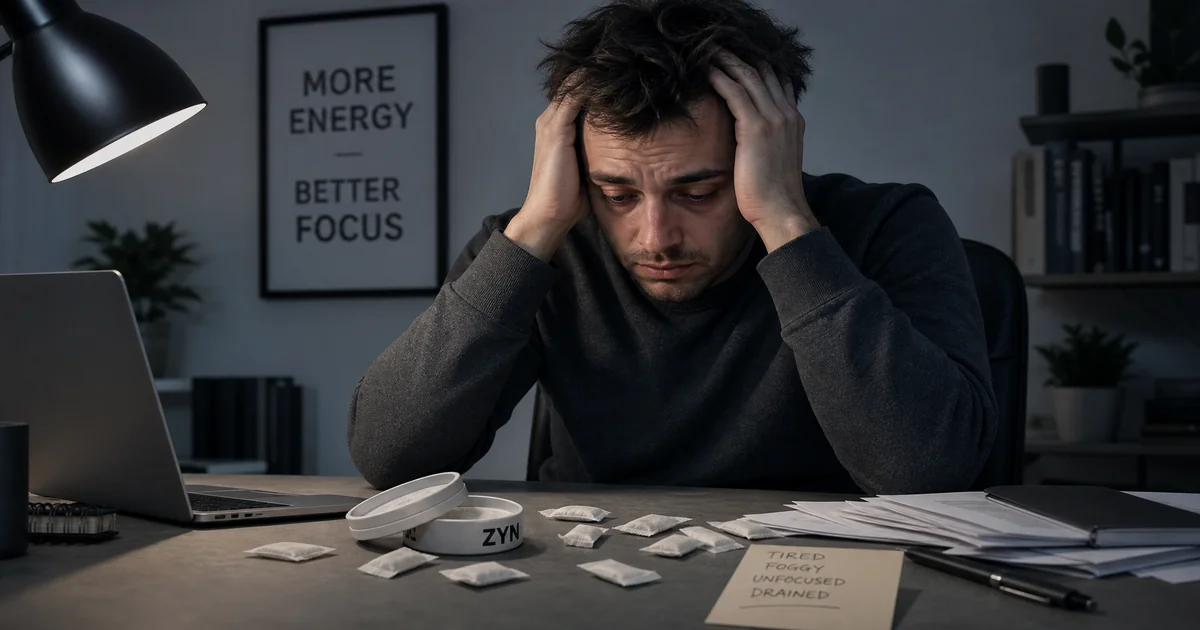
Many Zyn users report feeling tired, lazy, and unmotivated. While nicotine is a stimulant, it often leaves you more exhausted than energized. Understanding this paradox helps explain why quitting can actually improve your energy levels in the long run.
The Nicotine Energy Paradox
Nicotine is classified as a stimulant. It activates your nervous system, increases heart rate, and releases adrenaline. In theory, this should create energy. In practice, many Zyn users feel the opposite.
The problem lies in how nicotine affects your brain's reward system. It triggers a dopamine release that feels good temporarily. When that dopamine drops, you feel worse than before. The cycle of stimulation and crash creates net fatigue over time.
Your body also develops tolerance. The same pouch that once gave you a buzz now barely registers. You need more to feel normal, and the gaps between doses leave you feeling drained. What started as an energy boost becomes a maintenance requirement.
Why Zyn Makes You Feel Lazy
Users on r/QuittingZyn frequently describe feeling unmotivated while using nicotine pouches. Tasks that once seemed manageable feel overwhelming. The drive to accomplish goals diminishes even as the physical ability remains.
This happens because nicotine hijacks your natural motivation systems. Your brain starts relying on external stimulation rather than internal drive. Without the dopamine hit from a pouch, ordinary activities feel unrewarding and difficult to start.
The mental fog that accompanies heavy use compounds the problem. Concentration becomes difficult. Decisions feel harder to make. This cognitive sluggishness masquerades as laziness but has a chemical cause.
The Crash After the Buzz
The energy you feel from Zyn is borrowed, not earned. Your body pays interest on that loan in the form of fatigue. As nicotine levels drop, energy crashes below baseline. The result is a net loss over time.
Many users describe a pattern of artificial energy followed by exhaustion. They use a pouch to get through a task, then feel depleted afterward. The solution seems to be another pouch, perpetuating the cycle.
The crashes become more pronounced with heavy use. Multiple pouches per day create overlapping peaks and valleys. Your energy graph looks like a roller coaster rather than a steady line. This instability is exhausting to maintain.
Withdrawal Fatigue: The Deep Tiredness
Quitting Zyn brings fatigue that is different from the tiredness of use. This withdrawal exhaustion hits hard in the first week and can persist for several weeks. Understanding that it is temporary helps you push through.
Your brain has adapted to regular dopamine stimulation. Without nicotine, dopamine levels drop below normal. This creates a profound lack of motivation and energy that feels like depression. It is actually your brain recalibrating.
Physical symptoms accompany the mental fatigue. Many people report feeling heavy, slow, and physically drained. Simple tasks require enormous effort. This is normal and improves with time.
How Long Fatigue Lasts After Quitting
The timeline varies between individuals, but patterns emerge. The first three days typically bring the worst fatigue. Days four through seven show gradual improvement. By week two, most people feel significantly better.
Complete recovery of natural energy usually takes one to four weeks. Some people bounce back quickly. Others need more time, especially if they used heavily or for extended periods. Patience with the process is essential.
The good news is that energy typically improves beyond pre-quitting levels. Many former users report feeling more naturally energetic than they did while using Zyn. The temporary withdrawal fatigue leads to lasting vitality.
Regaining Natural Energy
Several strategies help restore your body's natural energy production. These approaches support recovery without creating new dependencies. The goal is sustainable vitality, not artificial stimulation.
Regular exercise paradoxically increases energy. Movement boosts circulation, improves sleep quality, and stimulates natural neurotransmitter production. Start gently and build up as your energy improves.
Proper nutrition supports recovery. Blood sugar fluctuations mimic and worsen withdrawal symptoms. Eating regular meals with protein, complex carbohydrates, and healthy fats provides steady fuel.
Sleep hygiene becomes crucial. Your brain does important recovery work during sleep. Protect your sleep schedule, create a restful environment, and avoid caffeine late in the day.
The Mental Energy Recovery
Physical fatigue is only part of the picture. Mental energy, motivation, and drive also need time to recover. This psychological aspect often takes longer than physical symptoms to resolve.
Your brain must relearn how to generate dopamine naturally. Activities that once felt rewarding through nicotine need to be rediscovered. This process requires patience and intentional effort.
Setting small, achievable goals helps rebuild motivation. Each accomplishment triggers natural reward pathways. Over time, these small wins accumulate into restored drive and ambition.
Using Energy Recovery as Motivation
The promise of natural energy motivates quitting when other reasons feel abstract. Everyone understands the value of feeling vibrant and capable. The prospect of sustained vitality appeals more than temporary stimulant effects.
Track your energy levels as you quit. Note when you feel most tired and when you have natural bursts of motivation. This data helps you see progress even when it feels slow.
Talk to former users about their energy recovery. Many describe feeling better than they have in years. These testimonials can strengthen your resolve during the difficult early weeks.
When Fatigue Indicates Other Issues
While withdrawal fatigue is normal, persistent exhaustion may indicate other problems. Knowing when to seek help ensures you get appropriate care for underlying conditions.
Consult a healthcare provider if fatigue persists beyond four weeks after quitting. While some people take longer to recover, extended exhaustion may indicate thyroid issues, anemia, depression, or other treatable conditions.
Sudden severe fatigue, especially with other symptoms like chest pain or shortness of breath, requires immediate medical attention. These could indicate serious cardiovascular or respiratory problems.
The Long-Term Energy Picture
Research on long-term nicotine cessation shows consistent improvements in energy and vitality. Former smokers and nicotine users report better physical function, improved mood, and greater life satisfaction.
Your cardiovascular system recovers, delivering oxygen more efficiently. Your sleep architecture normalizes, providing more restorative rest. Your brain chemistry stabilizes, supporting consistent motivation and drive.
The energy you regain is sustainable. Unlike the artificial peaks and crashes of nicotine use, natural vitality provides steady fuel for daily life. Tasks that once required chemical assistance become manageable through your own resources.
Related Articles
- How to Quit Zyn: Complete 2026 Guide
- Zyn Withdrawal Symptoms Timeline
- Zyn and Sleep Problems
- Zyn and Headaches
- Zyn and Stomach Problems
Frequently Asked Questions
Why does Zyn make me tired if it is a stimulant?
The stimulation is temporary and followed by a crash. Over time, your body develops tolerance and depends on nicotine to feel normal. The net effect is often increased fatigue rather than energy.
How long does fatigue last after quitting Zyn?
Most people see significant improvement within 1 to 2 weeks. Complete recovery of natural energy typically takes 2 to 4 weeks. Heavy users may need longer to fully recover.
Will I have more energy after quitting Zyn?
Yes. Most former users report better natural energy than they had while using. The temporary withdrawal fatigue gives way to sustained vitality.
Can I use caffeine to help with withdrawal fatigue?
Moderate caffeine use is fine, but avoid excessive amounts. Too much caffeine can worsen anxiety and sleep problems. Use it strategically, not as a replacement addiction.
Why do I feel lazy and unmotivated on Zyn?
Nicotine affects dopamine systems that drive motivation. Your brain starts relying on external stimulation rather than internal drive. This creates the feeling of laziness even when you are physically capable.
Ready to reclaim your energy? Download PouchOut for tracking, support, and guided cessation tools.