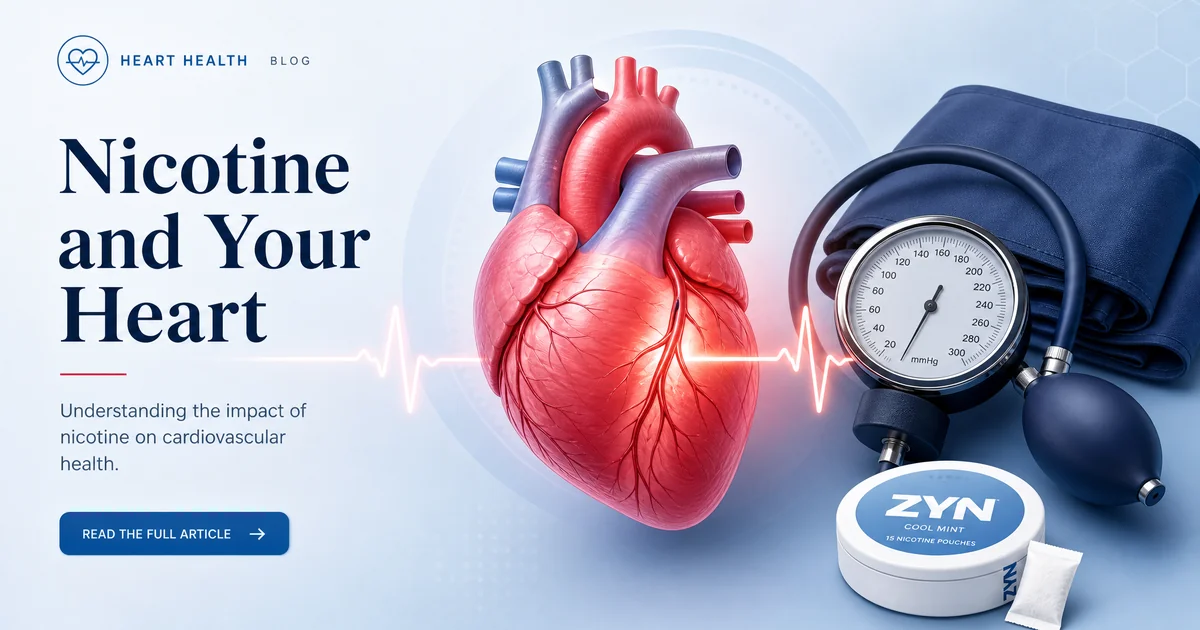
Nicotine pouches like ZYN can raise blood pressure and heart rate within minutes of use. While the increase is usually temporary, regular use throughout the day keeps your cardiovascular system under constant stress. Here's what the research actually shows about nicotine's effects on your heart and blood vessels.
Why Nicotine Affects Your Cardiovascular System
Nicotine is a stimulant. When it enters your bloodstream, it triggers the release of adrenaline and other stress hormones. This is the "fight or flight" response, and it is not subtle.
Your heart beats faster. Blood vessels constrict. Blood pressure climbs. These changes happen fast, often within five to ten minutes of putting in a pouch.
The cardiovascular system does not get used to this. Unlike some drug effects that fade with tolerance, nicotine's impact on heart rate and blood pressure remains consistent with repeated use. Each pouch produces a similar spike.
What Studies Show About Blood Pressure
Research on smokeless nicotine products shows measurable effects. A 2022 study in the journal Nicotine & Tobacco Research found that nicotine pouches increased systolic blood pressure by an average of 8-10 mmHg within 15 minutes of use. For someone with normal blood pressure, this is noticeable. For someone already on the edge of hypertension, it is concerning.
The effect is dose-dependent. Higher nicotine strengths produce larger spikes. A 6mg pouch produces a smaller increase than an 11mg pouch. Using multiple pouches back-to-back compounds the effect.
What makes this different from cigarettes? The speed. Cigarettes produce a faster, sharper spike because nicotine enters the bloodstream rapidly through the lungs. Pouches produce a slower rise that lasts longer. The total cardiovascular load may actually be higher with pouches because the nicotine stays elevated for 30-60 minutes instead of peaking and falling quickly.
Heart Rate Changes: The Data
Heart rate increases parallel blood pressure. Studies consistently show 10-20 beats per minute increases after nicotine pouch use. This is equivalent to light exercise.
The problem is context. If you are sitting at a desk and your heart rate jumps to what it would be during a brisk walk, your cardiovascular system is working harder without the benefits of actual movement. Over months and years, this chronic low-grade stress adds up.
Athletes notice this. Runners and cyclists who use ZYN report that their resting heart rate is elevated. Their heart rate variability, a marker of cardiovascular fitness and recovery, decreases. Some find their performance drops because their heart is already working harder before they start training.
Short-Term Versus Long-Term Risks
The short-term spikes are well documented. A single pouch raises blood pressure and heart rate for 30-60 minutes. This is not controversial.
Long-term cardiovascular risk is harder to pin down. Nicotine pouches are relatively new, so we do not have decades of data like we do with cigarettes. What we do know comes from studies on other smokeless tobacco products and nicotine replacement therapy.
Smokeless tobacco is linked to increased cardiovascular disease risk, though lower than smoking. Nicotine replacement therapy (patches, gum) shows minimal cardiovascular risk at recommended doses. Pouches fall somewhere between. They deliver more nicotine than NRT but without the combustion products that make cigarettes so deadly.
The conservative medical consensus is this: nicotine pouches are likely less harmful than cigarettes for cardiovascular health, but they are not harmless. If you do not already use nicotine, starting pouches introduces unnecessary cardiovascular stress. If you are trying to quit smoking, pouches may be a stepping stone, but the goal should be complete nicotine cessation.
Who Should Be Most Concerned
Certain groups face higher risks from blood pressure and heart rate increases.
People with existing hypertension should be cautious. Adding nicotine spikes on top of already elevated baseline pressure strains the arterial walls. Over time, this contributes to arterial stiffness and increases stroke risk.
Those with arrhythmias or heart rhythm disorders may find nicotine triggers episodes. The stimulant effect can push an occasional irregular heartbeat into a sustained problem.
People with a family history of cardiovascular disease should consider their genetic risk factors. If heart attacks or strokes run in your family, adding nicotine stress is playing with fire.
Young users often dismiss these risks. "I'm healthy, I exercise, it won't affect me." This misses the point. Cardiovascular damage accumulates over decades. Starting nicotine use in your twenties means thirty or forty years of daily blood pressure spikes before you hit the age where heart disease typically manifests.
The Hidden Factor: Constant Low-Grade Exposure
Here is what many users miss. It is not just about the spike from one pouch. It is about the pattern of use.
Someone using ZYN every hour throughout the day is essentially keeping their nicotine levels elevated from morning to night. Their blood pressure never fully returns to baseline. Their heart rate stays 5-10 beats per minute higher than it would be without nicotine.
This chronic low-grade elevation is insidious because you do not feel it. There is no obvious symptom. But your arteries are under constant stress. Your heart is working harder than it needs to. Over years, this contributes to the same cardiovascular changes that lead to heart attacks and strokes.
What Happens When You Quit
The good news: these effects are reversible.
Blood pressure and heart rate improvements begin within hours of your last pouch. Within 24 hours, your baseline heart rate drops. Within a week, blood pressure measurements show significant improvement. Within a month, cardiovascular markers often return to levels comparable to never-users.
The speed of recovery depends on duration and intensity of use. Someone using 6mg pouches occasionally for a year will recover faster than someone using 11mg pouches hourly for five years. But the direction is the same for everyone: quitting improves cardiovascular health.
Athletes often report the benefits first. Resting heart rate drops. Heart rate variability improves. Recovery after exercise speeds up. These are measurable markers of reduced cardiovascular stress.
Harm Reduction Versus Quitting
Some users switch to lower-strength pouches as a harm reduction strategy. This helps. An 8-10 mmHg spike from a 6mg pouch is better than a 12-15 mmHg spike from an 11mg pouch.
But harm reduction is not the same as risk elimination. Even low-strength pouches produce cardiovascular effects. The only way to fully eliminate nicotine's impact on blood pressure and heart rate is to quit entirely.
This is where apps like PouchOut help. Tracking use patterns reveals how frequently you are spiking your cardiovascular system. Structured quit plans help you reduce frequency and strength systematically. Support during the first weeks, when blood pressure and heart rate are already improving, reinforces that the effort is worth it.
The Bottom Line on ZYN and Cardiovascular Health
Nicotine pouches raise blood pressure and heart rate. This is not speculation. It is documented in multiple studies. The increases are temporary but frequent use creates chronic cardiovascular stress.
For healthy young adults, the immediate risk is low. The long-term risk is less certain but concerning. For anyone with existing cardiovascular issues, family history, or risk factors, the risk is real and present.
The cardiovascular system is resilient. It recovers when nicotine use stops. The question is whether you want to spend the next decade putting unnecessary stress on your heart and arteries, or whether you want to quit now and let your body heal.
Frequently Asked Questions
How much does ZYN raise blood pressure?
Studies show an average increase of 8-10 mmHg in systolic blood pressure within 15 minutes of use. The effect peaks around 30 minutes and gradually returns to baseline over the next hour. Higher strength pouches produce larger increases.
Is the blood pressure increase from ZYN dangerous?
For healthy individuals with normal blood pressure, occasional use produces temporary increases that are unlikely to cause immediate harm. However, frequent use throughout the day keeps blood pressure elevated above baseline for extended periods. For people with hypertension or cardiovascular risk factors, these spikes add stress to an already strained system.
Does ZYN increase heart rate?
Yes. Heart rate typically increases by 10-20 beats per minute after using a nicotine pouch. This effect begins within minutes and lasts 30-60 minutes. Regular users often maintain a slightly elevated resting heart rate throughout the day.
How long after quitting ZYN does blood pressure return to normal?
Initial improvements begin within 24 hours. Significant reductions are typically measurable within one week. Most former users see blood pressure return to levels comparable to never-users within one month of quitting.
Are nicotine pouches safer than cigarettes for heart health?
Current evidence suggests nicotine pouches are less harmful than cigarettes for cardiovascular health, primarily because they lack combustion products. However, they are not harmless. They still deliver nicotine, which produces the same cardiovascular effects regardless of source. The safest option for heart health is no nicotine at all.
Concerned about what ZYN is doing to your heart? Download PouchOut and start tracking your quit journey. Your blood pressure begins improving within 24 hours of your last pouch.