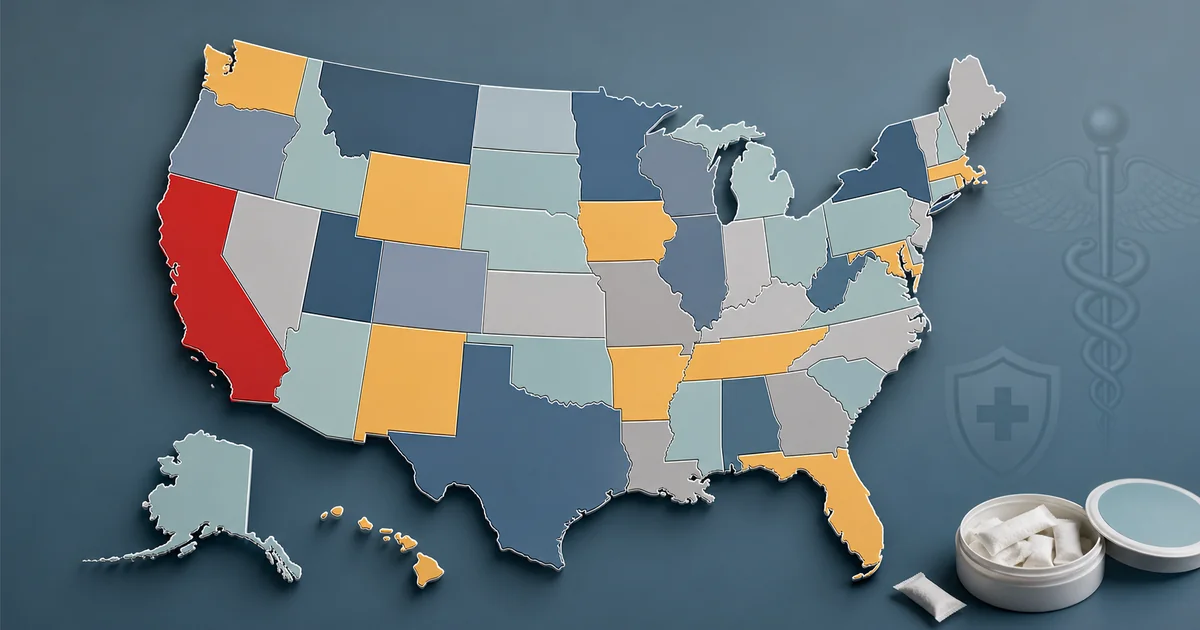
The landscape for flavored nicotine pouches is shifting rapidly across the United States. While federal regulations through the FDA set baseline standards for tobacco and nicotine products, individual states have increasingly taken matters into their own hands. Several states now restrict or completely ban the sale of flavored nicotine pouches, creating a patchwork of regulations that users must navigate. Understanding where these restrictions apply and what they mean can help you stay compliant while managing your nicotine use.
Why States Are Targeting Flavored Nicotine Pouches
State lawmakers have moved to restrict flavored nicotine products based on concerns about youth appeal. Flavors like mint, fruit, and cinnamon make nicotine products more palatable to new users, particularly teenagers and young adults who might otherwise find the taste of tobacco or unflavored nicotine unpleasant. Public health advocates argue that restricting flavors reduces the likelihood of youth initiation and helps prevent a new generation from becoming addicted to nicotine.
The logic follows similar reasoning that led to flavored vape restrictions and menthol cigarette bans in various jurisdictions. When California banned most flavored tobacco products in 2022, the law specifically included nicotine pouches alongside e-cigarettes and traditional tobacco products. Other states have followed with their own approaches, ranging from complete flavor bans to restrictions on specific flavor categories.
California: The Strictest Flavor Ban in Effect
California currently maintains the most comprehensive restriction on flavored nicotine pouches in the United States. The state's flavored tobacco law, which survived legal challenges and took full effect in 2023, prohibits the sale of most flavored tobacco and nicotine products. This includes nicotine pouches in flavors like mint, fruit, berry, coffee, and cinnamon. Only tobacco-flavored products remain legally available for sale within the state.
The law applies to both brick-and-mortar retailers and online sales shipped to California addresses. While some users have attempted to circumvent the restrictions by purchasing from out-of-state vendors, such transactions technically violate the law. The California Department of Public Health has authority to enforce these regulations, and retailers found selling prohibited products face significant fines and potential license revocation.
For California residents who use flavored nicotine pouches, the options are limited. Some have switched to tobacco-flavored alternatives, though many find the taste less appealing. Others have attempted to quit entirely, which was arguably the intended outcome of the legislation. The ban has undoubtedly reduced access to flavored products, though its long-term impact on youth nicotine use remains under study.
Oregon and Washington: County-Level Restrictions
Oregon has taken a different approach, allowing local jurisdictions to implement their own flavor restrictions. Multnomah County and Washington County, which include Portland and its surrounding suburbs, have enacted ordinances banning the sale of most flavored tobacco and nicotine products. The Oregon Supreme Court cleared the path for these local bans in July 2026, rejecting industry challenges that sought to invalidate the county ordinances.
The county-level approach creates significant variation within Oregon. Residents of Portland face the same restrictions as Californians, while those in Eugene, Bend, or other areas outside the affected counties can still legally purchase flavored nicotine pouches. This patchwork creates confusion and has led some users to travel across county lines to purchase products that are banned in their home jurisdiction.
Washington State has seen similar local action, with several cities and counties implementing flavor restrictions. The trend suggests that more local jurisdictions in both Oregon and Washington may follow suit, gradually expanding the geographic areas where flavored nicotine pouches are unavailable.
New York: Taxes But Not Flavor Bans
New York presents an interesting contrast. The state has not implemented a comprehensive flavor ban on nicotine pouches, but it has imposed significant taxes that affect pricing and accessibility. As of July 2026, nicotine pouches remain legal in all flavors in both New York State and New York City, though proposed legislation could change this status.
The New York State Legislature has considered bills that would restrict flavored nicotine products, following the model established in California. These proposals have generated significant debate, with public health advocates supporting restrictions and industry groups arguing that flavored products help adult smokers transition away from cigarettes. As of August 2026, no statewide flavor ban has passed, though the issue remains active in legislative sessions.
Users in New York should monitor developments closely. The regulatory environment could shift rapidly if new legislation passes. For now, flavored nicotine pouches remain available, though the state's high tax rates make them significantly more expensive than in jurisdictions without such levies.
Massachusetts and Rhode Island: Comprehensive Restrictions
Massachusetts was among the first states to implement comprehensive flavor restrictions, banning the sale of flavored tobacco and nicotine products in 2019. The law includes nicotine pouches alongside other tobacco products, leaving only tobacco-flavored options legally available. Rhode Island followed with similar legislation, creating a consistent regulatory environment across much of New England.
These states have actively enforced their flavor bans, with state health departments conducting compliance checks at retailers. The restrictions have significantly reduced the availability of flavored nicotine pouches, though some users report obtaining products through informal channels or out-of-state purchases.
New Jersey and Connecticut: Partial Restrictions
New Jersey and Connecticut have implemented more targeted approaches. New Jersey restricts certain flavor categories while allowing others, creating a complex regulatory framework that retailers and consumers struggle to navigate. Connecticut's restrictions focus specifically on products with characterizing flavors that appeal to youth, leaving room for interpretation about which specific products fall under the ban.
These partial restrictions illustrate the challenges of crafting effective flavor ban legislation. Regulators must define what constitutes a "characterizing flavor," and manufacturers continually reformulate products to skirt restrictions while maintaining palatability. The regulatory cat-and-mouse game creates uncertainty for users who cannot always predict whether their preferred products will remain available.
States Considering Future Restrictions
Several states have active legislative proposals that would restrict or ban flavored nicotine pouches. Illinois, Colorado, and Hawaii have all seen bills introduced in recent legislative sessions, though none had passed as of August 2026. The outcome of these proposals remains uncertain, depending on political dynamics and the effectiveness of advocacy efforts on both sides of the issue.
Users in these states should monitor legislative developments. The regulatory landscape can shift quickly when bills gain momentum. Even the introduction of restrictive legislation can create uncertainty, as retailers may preemptively reduce inventory of products that might soon become illegal.
The Impact on Users Trying to Quit
Flavor restrictions create particular challenges for people using nicotine pouches as part of a quit strategy. Many users find that flavored products help them transition away from cigarettes, which have their own flavor profiles from combustion and tobacco processing. When preferred flavors become unavailable, some users return to cigarettes rather than switching to tobacco-flavored pouches or quitting entirely.
This unintended consequence highlights the complexity of tobacco control policy. Restrictions designed to prevent youth initiation may inadvertently undermine harm reduction efforts among adult smokers. Public health researchers continue to study these tradeoffs, seeking approaches that protect youth without eliminating options for adults seeking to reduce their tobacco use.
Online Sales and Interstate Commerce
The internet complicates state-level flavor restrictions. Users in states with flavor bans often attempt to purchase products from online retailers based in jurisdictions without such restrictions. However, many states with flavor bans explicitly prohibit shipping prohibited products to addresses within their borders. Major online retailers generally comply with these restrictions to avoid legal liability.
Smaller vendors and individual sellers may be less scrupulous about compliance, creating a gray market for restricted products. Users who purchase through these channels risk receiving counterfeit or expired products, as the informal market lacks the quality controls of legitimate retail channels. Additionally, possession of products that violate state law could theoretically create legal exposure, though enforcement against individual consumers has been rare.
International Comparisons
The United States is not alone in restricting flavored nicotine products. The European Union is considering flavor restrictions as part of updated tobacco control directives, with some member states already implementing national bans. Denmark introduced flavor and strength limits in April 2026, significantly restricting the nicotine pouch market. France is moving toward a complete ban on nicotine pouches, with legislation advancing through Parliament.
These international trends suggest that flavor restrictions will likely expand in coming years. Users who travel internationally should be aware that products legally purchased in the United States may be prohibited in other countries. Conversely, travelers from Europe to the United States will find that American regulations, while increasingly restrictive, generally remain less stringent than those in many EU member states.
What the Future Holds
The regulatory trajectory for flavored nicotine pouches points toward increasing restrictions. Public health advocates continue to push for flavor bans, citing youth protection as the primary justification. Industry groups counter that flavors serve a legitimate harm reduction function for adult smokers, though this argument has gained limited traction in legislatures.
The FDA's recent authorization of flavored nicotine pouches through modified risk pathways has not preempted state restrictions. Federal authorization allows manufacturers to market specific products, but states retain authority to implement additional limitations. This federal-state tension will likely persist, creating ongoing uncertainty for users and retailers.
Practical Guidance for Users
If you live in a state with flavor restrictions, you face difficult choices. Switching to tobacco-flavored products represents the most straightforward compliance strategy, though many users find the taste less satisfying. Some users have successfully used flavor restrictions as motivation to quit nicotine entirely, though this approach requires significant commitment and support.
For those in states without current restrictions, monitoring legislative developments makes sense. The political momentum favors additional restrictions, and today's legal products may become prohibited in future legislative sessions. Building a quit plan that does not depend on specific flavored products provides flexibility regardless of regulatory changes.
Frequently Asked Questions
Are flavored nicotine pouches illegal everywhere?
No. Flavor restrictions vary by state and locality. Many states still allow the sale of flavored nicotine pouches, though the trend is toward increasing restrictions. Check your specific state and local regulations to determine what is legally available in your area.
Can I order flavored nicotine pouches online if my state bans them?
Most reputable online retailers will not ship prohibited products to addresses in states with flavor bans. Attempting to circumvent restrictions may violate state law and could result in confiscation of the products without refund.
Why do states ban flavors but not tobacco-flavored products?
The rationale is that flavors appeal to youth and encourage initiation, while tobacco flavors are less attractive to new users. Public health advocates argue that tobacco flavors are primarily used by adult smokers seeking alternatives, while fruit and candy flavors attract young people who have never smoked.
Will flavor bans help me quit nicotine?
Some users find that flavor restrictions provide motivation to quit, while others switch to tobacco-flavored products or return to cigarettes. The impact varies by individual. If you want to quit, consider using FDA-approved cessation medications rather than relying on regulatory changes.
Are nicotine pouches banned in New York City?
No. As of August 2026, nicotine pouches remain legal in all flavors in New York City and New York State. However, the products are subject to significant taxes, and proposed legislation could impose flavor restrictions in the future.
What flavors are typically banned in restricted states?
Most flavor bans target fruit, candy, dessert, and mint flavors. Tobacco-flavored products are generally exempt. Some jurisdictions also restrict menthol, while others specifically allow it. The exact scope varies by jurisdiction.
Can I bring flavored nicotine pouches when traveling to restricted states?
Technically, possession of products that violate state law could create legal exposure, though enforcement against individual consumers has been minimal. Travelers should be aware that their usual products may not be legally available at their destination.
Will the FDA ban flavored nicotine pouches nationwide?
The FDA has not proposed a comprehensive flavor ban. The agency has authorized specific flavored products through modified risk pathways, suggesting that flavors are not inherently prohibited at the federal level. However, the FDA could change its approach in response to new data or political pressure.
Conclusion
State-level flavor restrictions on nicotine pouches represent a significant shift in the regulatory landscape. California leads the nation with comprehensive restrictions, while other states have implemented partial bans or targeted specific flavor categories. The trend suggests that additional restrictions will follow in coming years.
For users, navigating this patchwork of regulations requires attention to local laws and willingness to adapt as the regulatory environment evolves. Some will switch to compliant products, others will seek informal channels for restricted flavors, and some will use the restrictions as motivation to quit entirely. Each approach carries its own tradeoffs and challenges.
The debate over flavor restrictions reflects broader tensions in tobacco control policy. Balancing youth protection against harm reduction for adult smokers remains contentious, with reasonable arguments on both sides. As more data becomes available about the real-world impact of flavor bans, policymakers will refine their approaches. For now, users must operate within the constraints of current regulations while preparing for potential future restrictions.
Ready to quit nicotine pouches? Download PouchOut and start your journey to a nicotine-free life today.
Related Articles
- New York ZYN Tax: What the 75% Increase Means for Users
- Oregon ZYN Tax and Nicotine Pouch Regulations
- Texas Nicotine Pouch Tobacco Tax Ruling Explained
- EU TPD3 Nicotine Pouch Regulation 2026
- France Nicotine Pouch Ban 2026
- FDA Approves ZYN Marketing 2026
- How to Quit ZYN: A Complete 2026 Guide
- What to Use Instead of ZYN: Alternatives Guide