I told myself it was harm reduction. That I was being smart about it. After fifteen years of cigarettes, the smell, the cough, the constant need to step outside, I finally quit. And for three glorious months, I was free. No cravings, no rituals, no standing in the rain while my coffee got cold.
Then a friend offered me a ZYN. "It's just nicotine," he said, popping a small white pouch between his gum and lip. "No smoke, no smell, no cancer. It's what all the guys at the gym use."
It looked harmless enough. Sleek packaging, mint flavors, discreet enough to use anywhere. I was stressed, missing the ritual of smoking, and convinced myself this was the bridge I needed, a way to manage the psychological withdrawal while my body adjusted.
I was wrong.
What ZYN Promises
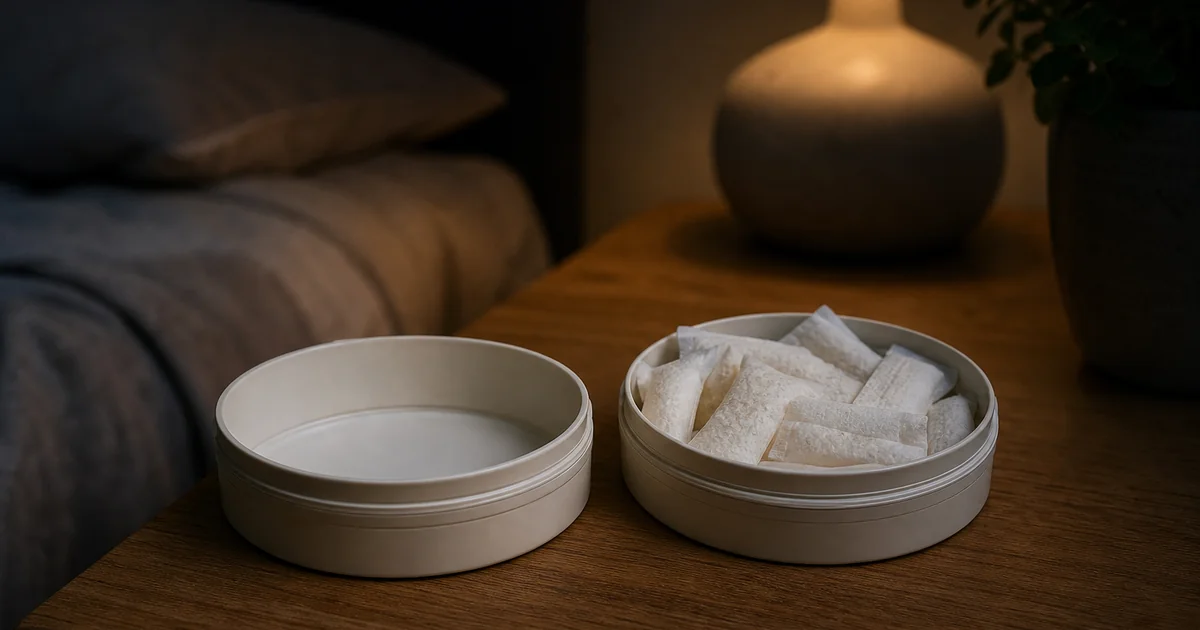
For the uninitiated, ZYN is a nicotine pouch. No tobacco leaf, just nicotine salts and food-grade fillers tucked into a tiny teabag-like sachet. You park it in your upper lip and absorb nicotine through your gum tissue. It comes in flavors like Spearmint, Cool Mint, and Coffee, almost like candy, which should have been my first red flag.
The marketing is brilliant. "Smoke-free." "Spit-free." "Hands-free." The implication is clear: all the satisfaction, none of the consequences. You can use it at your desk, in meetings, on planes. No one knows. You are not "that guy" stepping out for a smoke break. You are evolved.
I bought my first can, 6mg, "Strong," at a gas station. The clerk did not even ask for ID. I felt like I was buying gum.
The Trap Springs Shut
The first pouch felt like a revelation. A clean, intense rush of nicotine without the smoke, the ash, the guilt. I could feel my heart rate increase, that familiar warmth spreading through my chest. It was smoking distilled to its essence, just the drug, none of the theater.
But here is what they do not tell you: when you remove all the friction, you remove all the natural limits.
With cigarettes, there were built-in brakes. You had to go outside. You had to light up. You had to finish the thing. Each cigarette was a commitment, 10 minutes, a visible act, a finite dose.
ZYN has no such limits.
I started with one pouch in the morning. Then one with my coffee. Then one after lunch. By week two, I was rotating three pouches throughout the day, each one replaced the moment the buzz faded. I could use them in the shower. While driving. During Zoom calls, the pouch tucked discreetly in my lip, no one the wiser.
My nicotine intake did not just return to smoking levels. It exploded.
The Math Does Not Lie
A typical cigarette contains nicotine, but you only absorb a fraction of it per smoke. A single 6mg ZYN pouch delivers meaningfully more absorbed nicotine than a single cigarette. So each pouch is like smoking more than one cigarette. I was using 8-10 pouches a day. That is far more nicotine than I ever consumed as a smoker, and I was telling myself I had "quit."
The physical symptoms crept up gradually. My gums started to recede and bleed. I developed a constant low-level anxiety, that jittery feeling of having had one coffee too many. My sleep fragmented. I would wake up at 3 AM with an intense craving, fumbling in the dark for a fresh pouch.
But the psychological addiction was worse. The secrecy became its own prison. I was hiding my usage from my partner, from my coworkers. I had stashes everywhere: my desk drawer, my car, my gym bag. The shame compounded the addiction. I could not admit I had traded one dependency for a more insidious one.
The Illusion of Control
What makes ZYN particularly dangerous is how it masquerades as a quitting tool. The packaging suggests it is for "adult nicotine consumers" looking to "switch." The 3mg and 6mg strengths imply a tapering strategy. You tell yourself you will step down to 3mg, then quit entirely.
I tried. Multiple times. But the convenience made tapering impossible. When withdrawal hit, and it hit hard, the solution was always right there. No need to find a smoke shop, no social stigma, no weather to brave. Just reach into your pocket.
The pouches became a pacifier for every emotional state. Bored? ZYN. Stressed? ZYN. Celebrating? ZYN. I had rebuilt the exact same psychological dependencies I had with cigarettes, but with a delivery system that allowed for constant, invisible usage.
Breaking Free (Again)
My wake-up call came during a dental checkup. My dentist pulled back my lip and paused. "You are using nicotine pouches," she said. It was not a question.
She showed me the gum recession, the white patches where the pouches sat, the early signs of periodontal damage. "These are more concentrated than cigarettes," she explained. "And because there is no smoke, people think they are safe. But your gums are taking a beating."
I quit that day. Threw away my stashes. Accepted that I would face withdrawal, real withdrawal, worse than when I quit smoking because my nicotine dependence had actually increased. The first week was brutal. Headaches, irritability, intense cravings that felt like they originated in my bones. I had to relearn how to exist without the constant background hum of nicotine. How to take a phone call without a pouch. How to drive. How to think.
But I did it. Again.
The Lesson
Harm reduction is real, and for some people, switching from cigarettes to pouches might be a genuine step toward quitting. But for me, and I suspect for many, ZYN was not a bridge. It was a trap.
It removed all the social and logistical barriers that had previously limited my nicotine use. It allowed me to maintain and even intensify my addiction while telling myself I was "being healthier." The stealth nature of it meant I never had to confront what I was doing. No smoke breaks, no smell, no visible habit, just a constant, invisible dependency.
If you are considering ZYN as a quitting aid, be honest about your relationship with nicotine. If you could not moderate cigarettes, you probably cannot moderate these either. The delivery system is different, but the addiction is the same, or worse.
Quitting for real meant accepting that there is no safe version of this drug for me. No workarounds, no compromises, no "just this once." It meant going through the discomfort I had tried to avoid and emerging on the other side actually free.
I am four months clean now. The cravings still come, but they are waves I can ride instead of tides that drown me. And when they hit, I remind myself: I did not quit smoking to become a slave to something worse. I quit to be free. And freedom, it turns out, does not come in a sleek little can.
FAQ
Why did switching from cigarettes to ZYN make your addiction worse?
ZYN removed all the natural limits that cigarettes imposed. With smoking, I had to go outside, light up, and finish a cigarette in about 10 minutes. ZYN can be used anywhere: in the shower, while driving, during meetings. This frictionless access allowed my usage to escalate far beyond what I ever smoked, turning a controlled habit into a constant, invisible dependency.
How quickly can nicotine pouch usage escalate?
In my case, I went from one pouch in the morning to 8-10 pouches per day within two weeks. The convenience and lack of social stigma make it easy to increase usage without realizing how much you are actually consuming. For more on what constitutes excessive use, see our guide on how much ZYN is too much.
What are the physical warning signs of excessive ZYN use?
The symptoms crept up gradually for me: gum recession and bleeding, constant low-level anxiety, fragmented sleep, and waking up in the middle of the night with intense cravings. My dentist spotted white patches on my gums and early periodontal damage before I even realized how serious the problem had become.
Why is tapering from ZYN so difficult?
The packaging suggests tapering is possible with 3mg and 6mg strengths, but the convenience defeats the strategy. When withdrawal hits, the solution is always right there in your pocket. There is no smoke shop to visit, no weather to brave, no social stigma to face. The barrier to using "just one more" is essentially zero.
How does nicotine pouch withdrawal compare to cigarette withdrawal?
For me, quitting ZYN was actually harder than quitting smoking because my nicotine dependence had grown significantly. The first week brought headaches, intense irritability, and cravings that felt like they originated in my bones. Understanding the nicotine pouch withdrawal timeline helped me prepare for what to expect.
What role does secrecy play in nicotine pouch addiction?
The secrecy became its own prison. I hid stashes everywhere: my desk drawer, my car, my gym bag. I concealed my usage from my partner and coworkers. This shame compounded the addiction, making it harder to seek help or admit I had a problem. The invisible nature of pouches enables this secrecy in ways smoking cannot.
Is ZYN ever a legitimate harm reduction tool?
Harm reduction is real, and for some people, switching from cigarettes to pouches might be a genuine step toward quitting. However, for me and many others, ZYN became a trap rather than a bridge. If you could not moderate cigarettes, you will likely struggle to moderate pouches as well.
What actually worked for quitting ZYN?
My breakthrough came when my dentist confronted me with the physical damage. That external accountability, combined with accepting that I needed to face real withdrawal rather than avoid it, made the difference. I threw away all my stashes and committed to going through the discomfort rather than seeking another workaround.
Quitting ZYN was one of the hardest things I have done, but not for the reasons I initially expected. The challenge was not simply overcoming a chemical dependency. It was understanding how the product's design, its frictionless convenience and invisible usage, had allowed my addiction to grow stronger than ever.
If you are struggling to quit ZYN, know that your difficulties do not reflect weakness. They reflect the reality of a product designed to maximize usage while minimizing awareness. There is a path forward, but it may require accepting that there is no easy bridge, only the hard work of actually quitting.
Download PouchOut today and start your journey to a nicotine-free life with the support and structure you need to succeed.