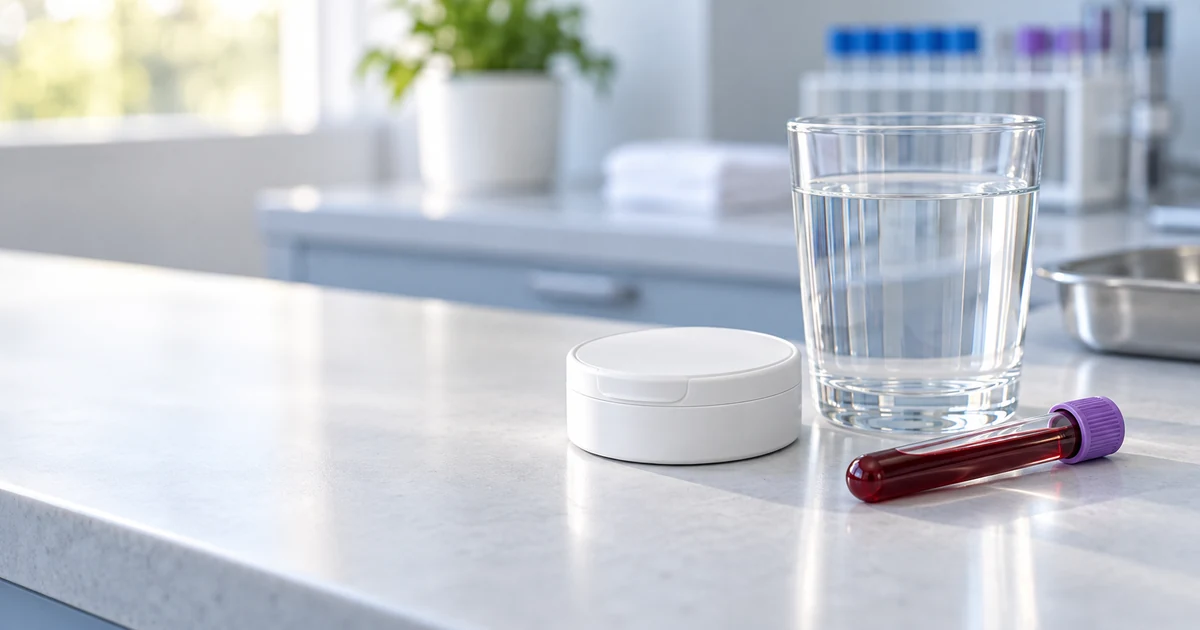
Do not use ZYN before a fasting blood test unless your clinician or lab has explicitly said it is allowed. A nicotine pouch may affect short-term readings such as heart rate, blood pressure, stress hormones, and blood sugar. The safest move is to follow the lab's instructions and disclose when you last used nicotine.
The lab-morning mistake most ZYN users do not think about
Imagine waking up for an early blood draw. You skip breakfast, drink only the water your instructions allow, and then place a pouch under your lip out of habit. It feels separate from eating because there is no chewing or swallowing.
Fasting instructions are not only about avoiding calories. They reduce short-term variables that can make a result harder to interpret. Nicotine is an active stimulant delivered through the lining of the mouth.
The practical answer is simple: if the test requires fasting, treat ZYN like any other nonessential substance and wait until after the sample is collected. If you already used a pouch, do not hide it or panic. Tell the person drawing your blood and ask whether the test should continue.
This advice applies whether you are using a lower-strength pouch occasionally or feel dependent on a stronger product. If delaying the first pouch of the day sounds unusually difficult, that can also be useful information about your relationship with ZYN.
Does ZYN break a fast for blood work?
There is no single definition of “breaking a fast” that covers every blood test. Some fasting instructions focus on food and caloric drinks. Others tell patients to avoid smoking, vaping, chewing gum, exercise, caffeine, or nicotine before the appointment.
ZYN contains nicotine plus flavorings, sweeteners, fillers, and other ingredients. Even if a pouch contributes few or no meaningful calories, nicotine can still create a short-term physiological response. That means “no calories” is not the same as “no effect on the test.”
Your lab order and clinician's instructions take priority. If they say nothing except “fast,” contact the lab before the appointment and ask specifically about nicotine pouches. Do not assume that guidance for plain water also applies to ZYN.
The same distinction matters outside medical fasting. Someone using pouches during an eating window may think about the issue differently, as explained in our guide to ZYN and intermittent fasting. A diagnostic blood test has a different goal: making the sample as consistent and interpretable as possible.
Which blood test results could nicotine affect?
Nicotine does not make every lab result inaccurate, and one pouch does not automatically ruin a blood draw. The concern is that it may shift certain short-term measurements or add uncertainty when a clinician compares your result with a reference range or an earlier test.
Blood glucose and insulin-related testing
Nicotine activates the body's stress response. That response can change how glucose is released and handled in the short term. For a fasting glucose measurement or another test related to blood sugar, using ZYN just before the draw creates a variable that is easy to avoid.
People being evaluated for diabetes, insulin resistance, or unexplained changes in glucose should be especially precise about following instructions. Our article on ZYN, blood sugar, and insulin resistance explains the broader connection.
Blood pressure and heart rate recorded with the visit
Blood pressure and pulse are vital signs rather than blood analytes, but they are often checked during the same appointment. Nicotine can temporarily raise both. A pouch used in the waiting room may therefore make the reading less representative of your resting baseline.
Sit quietly before the measurement and tell the clinician about recent nicotine use. If cardiovascular effects are already a concern, read our guide to ZYN, blood pressure, and heart rate.
Stress-sensitive hormones and metabolic markers
Nicotine stimulates the nervous system and can alter the body's immediate stress state. That matters when a clinician is trying to understand a hormone or metabolic result that is sensitive to time of day, stress, medication, exercise, or stimulant use.
It does not mean every hormone panel will become useless. It means the person interpreting the result needs accurate context. Follow any timing instructions exactly and disclose nicotine alongside medications, supplements, caffeine, and recent exercise.
Complete blood count and routine panels
A routine complete blood count or metabolic panel may not require fasting at all. The preparation depends on which tests were ordered together. A clinician might combine a routine panel with glucose, lipids, hormones, medication monitoring, or another test that has stricter instructions.
Check the entire order rather than guessing from one familiar test name. When in doubt, call the lab.
What to do before a fasting blood test if you use ZYN
The least stressful approach is to plan before the morning of the draw.
-
Read the instructions from the ordering clinician and the laboratory. Look for rules about nicotine, tobacco, gum, caffeine, medications, water, exercise, and fasting.
-
Ask a specific question if nicotine is not mentioned: “Can I use an oral nicotine pouch before this test?” The phrase “Can I smoke?” may not get you an answer that clearly covers ZYN.
-
Schedule an early appointment if morning cravings are strong. A shorter waking period before the draw can make it easier to wait.
-
Keep the unopened can out of your usual morning location. Automatic use is often driven by cues such as coffee, driving, or sitting at a desk.
-
Bring a note with the time of your last pouch, its strength, and any medications or supplements you took. This gives the clinician more useful context than simply saying you use nicotine.
-
Wait until the blood draw is fully complete before using a pouch, unless the clinical team tells you otherwise. Some appointments involve more than one timed sample.
If the morning routine exposes how automatic your use has become, our guides to psychological versus physical nicotine pouch addiction and the ZYN addiction recovery timeline can help you understand the pattern.
What if you already used a pouch?
Do not cancel the appointment on your own, and do not pretend it did not happen. Remove the pouch, note the approximate time and strength, and tell the laboratory staff before the sample is collected.
They may proceed, add a note, ask the ordering clinician, or reschedule a fasting test. The right choice depends on the exact test and the purpose of the result. A monitoring test with flexible preparation is different from a carefully timed diagnostic test.
Honest disclosure protects you from two problems. First, it helps the clinician interpret an unexpected value. Second, it avoids treating a preparation issue as a new medical problem. The goal is not to pass or fail the blood test. The goal is to obtain information your clinician can trust.
ZYN, nicotine tests, and ordinary blood work are different questions
Many people searching this topic are actually worried that routine blood work will reveal nicotine use. Standard blood panels do not automatically test for nicotine. A nicotine or cotinine test must generally be specifically ordered.
That type of screening has different preparation and interpretation rules. Avoiding one pouch on the morning of a cotinine test will not necessarily remove evidence of regular nicotine exposure. Our guide to cotinine testing for nicotine pouch users covers that distinction, while nicotine pouches and drug tests explains why ordinary drug screens are another separate category.
If a form asks about nicotine use, answer accurately even if the blood order does not include cotinine. Medical disclosure helps clinicians understand cardiovascular risk, medication response, healing, dependence, and withdrawal.
Should you stop ZYN suddenly before the test?
For a single morning blood draw, the usual practical goal is to delay use until the appointment is finished, not to improvise a long-term medical plan. Regular users may notice cravings, irritability, restlessness, trouble concentrating, or a headache when they postpone nicotine.
Plan for those sensations rather than letting them surprise you. Book early, avoid your strongest triggers, bring water if it is permitted, and leave enough time that you are not adding stress by rushing.
Do not stop prescribed medication or use a nicotine replacement product before the test unless the clinician approves it. A patch, gum, or lozenge also delivers nicotine and may conflict with the preparation instructions.
If a few hours without ZYN feels unmanageable, consider using the appointment as a starting point for change. PouchOut helps users track cravings, identify trigger routines, see money saved, and work through a structured quit plan. You can download PouchOut or read about a nicotine patch and ZYN hybrid quit strategy.
A simple rule for the morning of your lab appointment
If you were told to fast, use only what the lab explicitly allows. Do not add ZYN because it feels less significant than food, coffee, or cigarettes. Nicotine is active in the body even when it comes in a small, smoke-free pouch.
If you were not told to fast, you should still ask about nicotine when the order involves glucose, hormones, cardiovascular measurements, or other timing-sensitive results. Tell the clinical team when you last used a pouch and follow their decision.
Clear preparation is easier than trying to explain an avoidable variable after a surprising result. It may also reveal whether ZYN has become tied to every morning task, commute, and stressful appointment. If that sounds familiar, the PouchOut quitting system can help turn one delayed pouch into a more deliberate plan.
Frequently asked questions
Can I use a nicotine pouch while fasting for blood work?
Avoid it unless your clinician or laboratory has explicitly approved it. A pouch may contain little or no meaningful energy, but nicotine can still affect short-term physiological measurements. Follow the instructions for your exact order.
Can ZYN affect a fasting glucose test?
Nicotine can activate a stress response that may influence short-term glucose handling. For a fasting glucose test, wait until after the draw and disclose recent nicotine use if you already used a pouch.
Will ZYN show up on a normal blood test?
Routine blood work does not normally include a nicotine or cotinine screen. Nicotine exposure generally requires a specific test. Still, disclose your use when asked because it can be relevant to interpretation and care.
Can I drink water with a ZYN pouch before the test?
Permission to drink plain water does not automatically include permission to use ZYN. Water and an oral nicotine pouch are different exposures. Ask the lab specifically about nicotine.
How long before a blood test should I stop using ZYN?
The answer depends on the test, your pattern of use, and the laboratory's protocol. Do not rely on a universal cutoff. Ask the ordering clinician or lab and follow the instructions they provide.
What should I tell the phlebotomist if I used ZYN?
Tell them the approximate time, pouch strength, and whether the test was meant to be fasting. They can decide whether to collect the sample, add a note, contact the clinician, or reschedule.
Does using ZYN before a blood pressure check matter?
Yes. Nicotine can temporarily raise heart rate and blood pressure. Avoid using a pouch immediately beforehand, sit quietly, and tell the person taking the measurement about recent use.
Is it safe to quit nicotine on the day of a blood test?
Delaying a pouch for a morning appointment may cause temporary withdrawal symptoms in a regular user. A full quit attempt benefits from preparation and support. If you have a medical condition or use nicotine heavily, discuss the plan with a clinician.