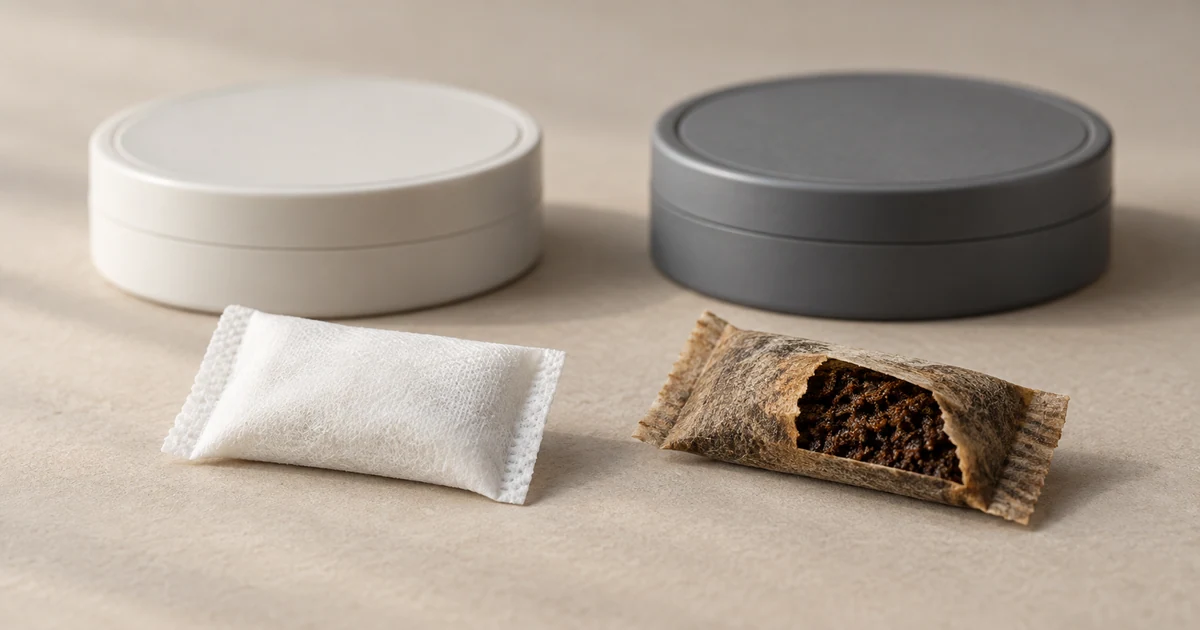
Snus contains tobacco. Modern nicotine pouches generally do not. Both sit between the lip and gum, can deliver nicotine into the bloodstream and can sustain dependence. Taking out the tobacco does not take out the nicotine or eliminate concerns about effects on the mouth and cardiovascular system.
The difference in composition is straightforward. The long-term risk for any one person is not. FDA reached favorable comparative conclusions for specifically authorized ZYN products when it reviewed them against cigarettes and most smokeless tobacco products, including snus. That finding does not cover every pouch, every snus product or every health outcome.
FDA's findings apply only to the ZYN products it specifically authorized, not to every nicotine pouch. They do not make those products safe or settle the unanswered questions about long-term use. The general guide to whether ZYN is bad for you explains why lower exposure is not the same as no risk.
What each product contains
Traditional Swedish snus is an oral tobacco product. A modern tobacco-free nicotine pouch uses nicotine, filling materials and other ingredients instead. That nicotine may be tobacco-derived or synthetic. Its source does not make the product non-addictive or tell you how much nicotine will reach the bloodstream.
Named products give us a firmer basis for comparison than broad assumptions about whole categories. Background materials prepared for an FDA advisory committee identify the absence of tobacco leaf and stems as a critical design difference between ZYN and General Snus. That tells us about those products, not every item sold as a nicotine pouch.
Read the ingredient panel instead of judging a product by its white pouch, round tin or familiar branding. The guide to what is in a ZYN pouch looks at one named formulation. The broader truth about ZYN guide examines the assumptions that can come with tobacco-free marketing.
Check the package itself, not just the tin. Does the ingredient list name tobacco? How is the nicotine content expressed? Which warnings and legal category appear on the label?
Why tobacco-free does not settle the health comparison
Leaving out tobacco leaf can change exposure to some harmful constituents. FDA concluded that the specifically authorized ZYN products contained substantially lower amounts of harmful constituents than cigarettes and most smokeless tobacco products, including snus. The agency also found a lower risk of cancer and other serious conditions than with those comparators. That conclusion matters, but it is limited to the products and comparisons FDA reviewed.
It does not make nicotine pouches harmless, and it does not show that every brand or strength performs like the authorized products. It also does not provide a precise long-term disease-risk estimate for someone choosing between any pouch and any snus product.
Smoking is a different comparison. FDA says adults who smoke may reduce exposure to many harmful chemicals if they switch completely to FDA-authorized nicotine pouches. That does not directly answer the snus question, and it does not describe using pouches while continuing to smoke. The dedicated ZYN versus smoking guide explains the distinction.
So the answer is not as simple as tobacco versus no tobacco. Product-specific evidence may support lower exposure to some constituents. But nicotine can still affect the body and reinforce repeated use, and the pouch still sits directly against the mouth. Evidence on the long-term effects of newer formulations remains too limited for broad promises.
What the oral-tissue evidence can and cannot show
Both products rest against oral tissue, so local effects matter. A Karolinska Institutet report on a clinical comparison said reactions differed between tobacco-free nicotine pouches and traditional snus. Reactions to snus increased with higher consumption, while the report found no similarly clear relationship for nicotine pouches. It also described nicotine-pouch reactions as more variable from one person to another.
That does not show that nicotine pouches are gentler on the mouth. One episode of irritation cannot predict permanent damage or a future diagnosis either. The supplied source is an institutional summary rather than the full methods, so it cannot support unreported rates, adjusted comparisons or causal estimates.
Pay attention to the spot where you place the pouch. Persistent soreness, visible changes, repeated ulceration, bleeding or recession call for professional assessment, not self-diagnosis from an online comparison. Moving the pouch may change the contact site, but it does not prove that continued use is safe.
The gum-health guide covers local irritation and dental questions in more detail. Long-term cancer questions require particular care. No tobacco leaf, lower exposure to some constituents and a lack of long-term outcome evidence are separate facts. The oral cancer evidence guide keeps them separate without turning uncertainty into reassurance or alarm.
Nicotine strength, absorption and dependence
The nicotine number on a package describes product content according to the label. It does not show how much reaches the bloodstream. BfR reported that at least half of the nicotine in the pouches it assessed could be absorbed and that relevant blood nicotine levels were achieved.
A content label is not a measurement of absorbed nicotine. Do not treat a printed milligram value as a health-risk assessment. Ingredients differ between products, so one package cannot stand in for an entire category.
Either product can keep the nicotine cycle going. Switching may change the source, taste, ritual or toxicant exposure without ending dependence. Someone who stops using snus but reaches for nicotine pouches throughout the day has changed products, but may not have reduced nicotine exposure or gained more control over use.
Removing tobacco leaf does not remove nicotine from cardiovascular questions. The cardiovascular guide looks at that narrower topic, but it cannot provide a personal risk score. Individual advice matters for anyone with symptoms, cardiovascular disease, pregnancy, medication questions or other clinical concerns.
A practical label-reading checklist
When comparing tins, start with the package rather than the front-of-can impression. Similar shapes and flavors can hide meaningful differences. Check the following before treating two products as equivalent.
-
Look for an explicit statement about tobacco. A tobacco-free nicotine pouch is different from one containing ground or processed tobacco.
-
Check whether nicotine is listed per pouch, per gram or in another unit. You cannot directly compare unlike units.
-
Treat the printed nicotine amount as content information, not a promise about absorption, intensity or safety.
-
Read the full ingredient list rather than guessing the formulation from a white pouch's appearance.
-
Match any regulatory statement to the exact brand, variety and strength. Authorization of named products does not authorize the whole category.
-
Review the warnings and rules where the product is bought or used. Names and legal categories vary by jurisdiction.
Then consider how you use the product. Frequency, time to the first pouch of the day, use after waking during the night, repeated placement at one spot in the mouth and combining products may be more revealing than which tin looks cleaner or more modern.
Switching products is not the same as ending nicotine use
Someone may switch from snus to nicotine pouches because the pouches contain no tobacco leaf. That can be a meaningful product change, especially when product-specific evidence supports lower exposure to harmful constituents. Yet the switch can preserve the daily cues, placement ritual, nicotine dosing and worry about running out that make the behavior hard to change.
If the goal is to stop smoking, partial substitution is not the complete switch described by FDA. Moving from snus to pouches also falls short if the goal is to stop nicotine. Be clear about the outcome you want: less tobacco exposure, no smoking, lower nicotine intake or no nicotine.
Do not assume that consumer nicotine pouches are cessation medicines. BfR treats nicotine replacement medicines as a separate category. The NRT versus ZYN comparison explains why regulatory status, intended dosing and treatment evidence matter when choosing a quit aid.
If you want to cut down or stop, record when you use each pouch and what prompted it. You may notice triggers such as withdrawal, driving, meals, social settings, stress or concentration rituals. A clinician or qualified cessation service can adapt a plan to your medical history and current use. No comparison article can promise a symptom-free quit or guarantee that a method will work.
Frequently asked questions
Do nicotine pouches contain tobacco?
Modern products marketed as tobacco-free nicotine pouches generally contain no tobacco leaf. They use nicotine, filling materials and other ingredients. The nicotine may be tobacco-derived or synthetic, so tobacco-derived nicotine does not necessarily mean that the pouch contains tobacco leaf. Check the package because formulations and terminology vary.
Is snus the same thing as a nicotine pouch?
No. Swedish snus contains tobacco; tobacco-free nicotine pouches do not contain tobacco leaf. Both go between the lip and gum and may look similar, but their composition differs. Sellers sometimes use overlapping terms, so rely on the ingredient list rather than the pouch's appearance.
Are nicotine pouches safer than snus?
There is no single answer that covers every product. FDA found substantially lower amounts of harmful constituents and a lower risk of serious conditions in specifically authorized ZYN products than in most smokeless tobacco products, including snus. That finding is product-specific. It does not automatically apply to every pouch or snus product, and long-term evidence remains too limited for precise category-wide disease estimates.
Can nicotine pouches affect the gums or oral lining?
Yes. Local reactions can occur. A Karolinska Institutet report said oral mucosal reactions differed between nicotine pouches and traditional snus and varied more among nicotine-pouch users. The supplied summary cannot predict how severe a reaction will be for one person or establish definitive long-term outcomes. Seek professional assessment for persistent or concerning changes.
Which is stronger, snus or a nicotine pouch?
Neither category is always stronger. Strength depends on the product, its nicotine content, its formulation and how it is used. The printed nicotine number is not the same as the absorbed dose. Compare units carefully, and do not assume that color, size or product category predicts systemic exposure.
Are snus or nicotine pouches approved cessation treatments?
Do not assume either consumer product is an approved cessation treatment. Nicotine replacement medicines are a separate category, and approval depends on the product and jurisdiction. FDA authorization to market a tobacco product is not approval of a medicine for quitting. Discuss treatment options with a qualified professional and check the relevant regulator.
Does switching from snus to nicotine pouches end nicotine dependence?
Not necessarily. A genuinely tobacco-free product removes tobacco leaf, but the switch can preserve nicotine exposure and the routines built around use. If you want to stop nicotine rather than simply change products, start by assessing your daily frequency, triggers and total use.
Bottom line
Snus contains tobacco; modern tobacco-free nicotine pouches generally do not. That difference can affect exposure to harmful constituents. FDA made a lower-risk determination for specifically authorized ZYN products compared with cigarettes and most smokeless tobacco products, including snus. That does not make every nicotine pouch harmless or fully understood.
Use the label, not the tin's appearance, to identify tobacco content, nicotine units and ingredients. Tobacco leaf is only one part of the decision. Nicotine exposure, oral symptoms, cardiovascular concerns and dependence still matter. If your aim is to stop nicotine, changing products and ending dependence are separate steps.
This article compares product categories and cannot determine which individual product is safer for a particular person.
The BfR assessment is dated and must not be presented as current law or a complete account of later evidence.
The Karolinska source is an institutional report rather than supplied full journal methods, so no unreported estimates or causal conclusions are used.
FDA findings discussed here apply to specifically authorized ZYN products and do not extend automatically to every nicotine pouch.
The FDA cigarette comparison is not evidence of the same relative effect when nicotine pouches are compared directly with snus.
Long-term independent evidence specific to nicotine pouches remains insufficient for definitive comparative disease-risk estimates.
Nicotine content printed on packaging is not equivalent to absorbed nicotine or systemic exposure.
Brand, formulation, strength, moisture, ingredients and national legal definitions can vary.
Neither snus nor consumer nicotine pouches are presented as approved cessation treatment without product-specific and jurisdiction-specific evidence.
The article provides general information and is not a diagnosis or individualized medical advice.
Sources
- FDA: review of the authorized ZYN products
- BfR: nicotine-pouch health-risk assessment
- Karolinska Institutet: oral-tissue comparison