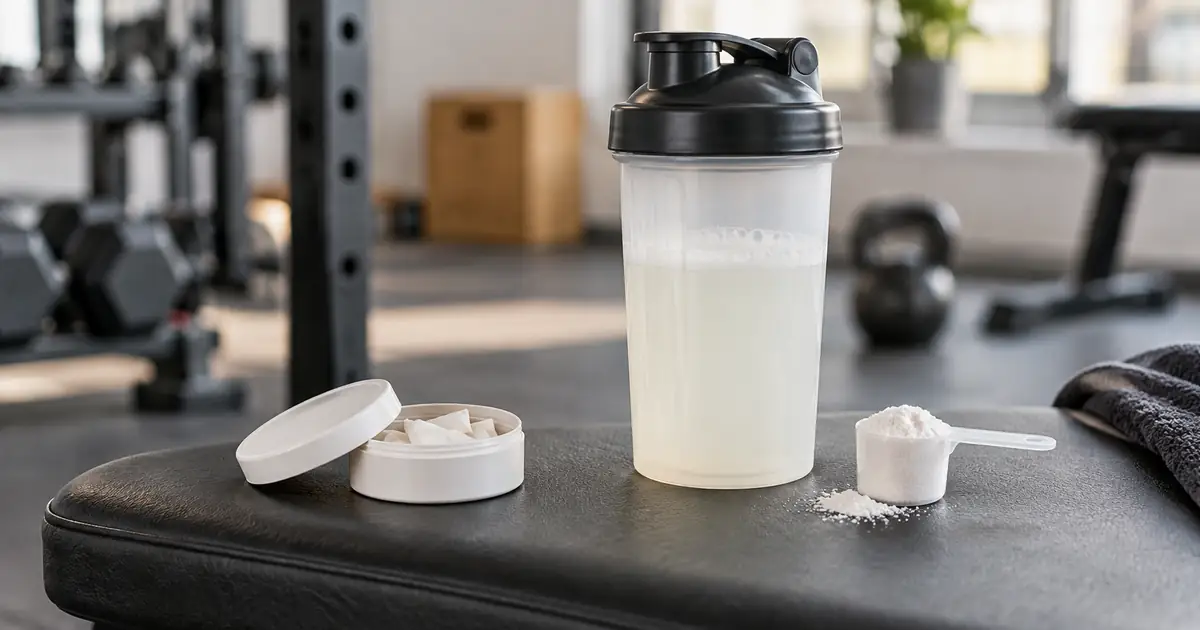
There is no established direct chemical interaction between creatine monohydrate and the nicotine in ZYN. They do different things. Creatine supports the rapid energy system used during repeated high-intensity effort, while nicotine is an addictive stimulant. The missing interaction is not a safety guarantee. Using a pouch around training can still raise heart rate and blood pressure, cause nausea or dizziness, and make it harder to tell why a workout feels wrong.
What people mean by "ZYN and creatine"
This question often appears after a routine has formed: creatine goes into the morning shake, a pouch goes in before the gym, and the two begin to feel like one pre-workout ritual. The useful question is not whether both powders meet in the stomach. ZYN sits under the lip and nicotine is absorbed through the lining of the mouth.
The better questions are whether nicotine changes the training experience, whether creatine offsets any of nicotine's downsides, and whether taking both creates symptoms that are easy to misread. Those are separate issues.
If the pouch is being used for focus, our guide to nicotine's nootropic claims explains why feeling alert is not the same as improving performance.
Creatine and nicotine do different jobs
Creatine is stored in muscle mainly as phosphocreatine. It helps regenerate adenosine triphosphate during brief, demanding effort such as lifting or sprinting. The NIH Office of Dietary Supplements describes creatine as one of the most studied sports-supplement ingredients and notes that it can improve repeated short bursts of high-intensity activity.
Nicotine acts on nicotinic acetylcholine receptors and prompts the release of several neurotransmitters. The resulting stimulation may feel like sharper attention or extra drive. It also reinforces repeated use. The CDC's nicotine-pouch overview says nicotine is highly addictive and that more research is needed on the short-term and long-term effects of pouches.
Creatine supports a particular energy system. Nicotine changes arousal and cardiovascular activity. One does not turn the other into a better supplement.
Is there a direct interaction?
No well-established direct interaction between ordinary creatine monohydrate and nicotine pouches has been identified. There is also little research designed specifically around people taking creatine while using ZYN. Those statements belong together.
An absence of a documented interaction can mean the substances work through different pathways. It can also mean researchers have not studied that exact combination closely. It should not be rewritten as "proven safe."
If you take prescription medicines, have kidney disease, high blood pressure, a heart rhythm condition, or have been told to limit stimulants, ask a clinician or pharmacist about your routine. Include the pouch strength, daily quantity, caffeine intake, creatine dose, and other supplements. A branded "stack" description is less useful than actual ingredients and amounts.
Why a workout can still feel different
Nicotine stimulates the adrenal system. The National Institute on Drug Abuse explains that nicotine-related adrenaline can increase blood pressure, breathing, and heart rate.
Exercise changes those same measures, along with body temperature and fluid needs. That overlap can make a bad reaction confusing. A pounding heart might be blamed on a hard set. Lightheadedness might be blamed on standing too quickly. Nausea might be blamed on a shake. The pouch may be contributing even though creatine is present in the same routine.
The guide to ZYN heart palpitations covers warning signs in more detail. Stop exercising and seek urgent medical help for chest pain, fainting, severe shortness of breath, or a sustained irregular heartbeat.
Creatine does not cancel nicotine's effects
Creatine will not neutralize nicotine, prevent dependence, protect your gums, or stop a pouch from increasing cardiovascular strain. It is not an antidote.
This misunderstanding can grow from fitness language about "supporting recovery." Better training recovery does not erase the acute effects of another drug. Drinking water is sensible during exercise, but it does not make a high nicotine dose harmless.
If higher-strength pouches have started to feel normal, read how much ZYN may be too much and the 3 mg versus 6 mg side-effects guide. Tolerance is a reason to examine the pattern, not to keep escalating it.
What about dehydration and cramps?
Creatine is often blamed for dehydration and cramping, but the practical hydration issue is broader than one ingredient. Hard training, heat, sweat, illness, alcohol, caffeine, food intake, and total fluid intake all affect how someone feels.
Nicotine can produce dry mouth, nausea, or reduced appetite. Those effects may make drinking or eating before training less appealing. A dry mouth is not a precise hydration test, but it is still a reason to pause and assess the situation.
Do not respond to dizziness by automatically adding more water, salt, creatine, or stimulants. Stop, remove the pouch, cool down, and assess your symptoms. Persistent vomiting, confusion, fainting, or severe weakness needs medical attention. See ZYN, dehydration and fluid balance for a closer look.
Timing does not solve dependence
Moving a pouch from the middle of a workout to thirty minutes before it may change when the stimulation peaks. It does not remove nicotine exposure or the habit loop.
Workout-linked use can become sticky because the cues repeat: the same gym entrance, playlist, warm-up, and tin. Training without a pouch may eventually feel flat even when physical capacity has not changed. That contrast is partly the routine and partly withdrawal from a drug the brain expects.
Our article on ZYN at the gym covers the wider exercise picture. If the pouch feels mandatory before every session, the useful experiment is a pouch-free training day, not a more precise dosing schedule.
Separate the variables
You do not need a complicated supplement spreadsheet. Keep creatine intake consistent and change only the nicotine part of the routine.
- Write down your usual pouch strength, timing, caffeine, and workout type.
- Choose an easier training day and leave the pouch out of the session.
- Keep food, fluids, creatine, and caffeine close to normal.
- Record cravings, focus, nausea, heart sensations, and perceived effort.
- Repeat on several comparable days before drawing a conclusion.
This is not a medical test. It is a way to stop changing five variables at once. It may reveal that the pouch was treating withdrawal created by the previous pouch rather than adding useful performance.
Break the pre-workout cue
Put the tin somewhere other than the gym bag. Delay the first pouch until after the time you normally train, or plan a gradual reduction if abrupt stopping has been difficult. Replace the hand-to-mouth ritual with gum, a water bottle, or a fixed warm-up sequence.
The aim is to prove that the session can begin without nicotine. Urge surfing helps when a craving rises during a familiar cue, and cold turkey versus gradual reduction can help you choose a realistic quit approach.
Creatine can remain a separate nutrition decision. Nicotine dependence needs its own plan.
When to talk with a clinician
Ask for individual advice if you have cardiovascular disease, kidney disease, uncontrolled blood pressure, recurrent palpitations, a history of fainting, or unexplained exercise intolerance. The same applies if you take medicines that affect heart rate, blood pressure, kidney function, or fluid balance.
Bring the creatine label and pouch container. "One scoop" and "one pouch" are not doses because products differ. Mention energy drinks, coffee, pre-workout powders, and recent changes in training load.
If symptoms began after adding one product, stop treating the combination as a single mystery. A clinician can help separate supplement effects, nicotine effects, training stress, and unrelated medical causes.
Frequently asked questions
Can I take creatine while using ZYN?
There is no established direct interaction between creatine monohydrate and ZYN, but the exact combination has not been studied well enough to call it risk-free. Nicotine can still cause dependence, nausea, dizziness, and cardiovascular effects. Health conditions, medicines, pouch strength, caffeine, and training intensity matter.
Does creatine make nicotine safer?
No. Creatine does not neutralize nicotine or protect against addiction, oral irritation, increased heart rate, or increased blood pressure. It may support repeated high-intensity exercise, but that is a separate effect. Do not use one product as justification for taking more of the other.
Will ZYN reduce creatine's muscle benefits?
Direct evidence on ZYN plus creatine is limited, so a confident yes or no would go beyond the research. Nicotine can affect appetite, sleep, cardiovascular responses, and dependence patterns, which may influence training indirectly. Consistent nutrition, sleep, programming, and recovery matter more than a perceived nicotine boost.
Is a ZYN pouch a good pre-workout?
No. Feeling stimulated does not make nicotine a sound sports supplement. A pouch may make someone feel alert, but it can also cause nausea, dizziness, palpitations, and dependence. Using it before every session can bind cravings to the gym routine and make nicotine-free workouts feel harder.
Should I stop creatine when quitting ZYN?
Not automatically. Keeping a familiar creatine routine stable may make it easier to identify nicotine withdrawal and habit cues. Ask a clinician about creatine if you have kidney disease, take relevant medicines, or have been advised to avoid it. The quit decision and supplement decision can be handled separately.
What if I feel dizzy during a workout with a pouch in?
Stop exercising, remove the pouch, sit or lie down safely, and cool down. Do not add another stimulant. Seek urgent help for fainting, chest pain, severe shortness of breath, confusion, or a sustained irregular heartbeat. Repeated milder episodes also deserve medical review.
Can PouchOut help if I only use ZYN at the gym?
Yes. A cue-specific habit is still a habit you can track. PouchOut can help you record use, identify workout triggers, plan reductions, and see nicotine-free sessions accumulate. The goal is to make training belong to you again rather than to a pouch schedule.
Creatine and ZYN are not a proven dangerous chemical pair, but they are not a useful fitness stack either. Keep the evidence limits clear, pay attention to symptoms, and treat nicotine as the addictive drug in the routine.
If you want to separate ZYN from your workouts, build a structured quit plan and use PouchOut to track the change.