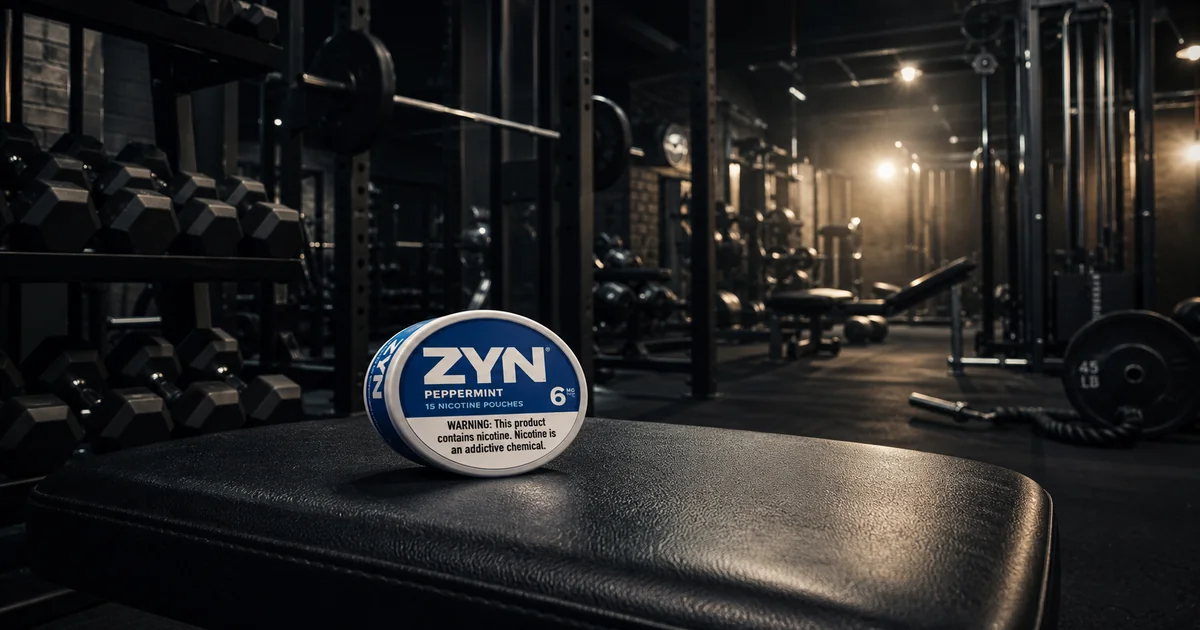
You have probably seen it. Gym TikTok, fitness Instagram, the usual places. Someone filming their morning stack: coffee, creatine, and a 6mg ZYN pouch. They call it their "secret weapon" for focus. The comments fill with people asking if it works, where to buy, how much to use.
This trend has grown from fringe to mainstream over roughly the past six months. At first it was niche. Now it is everywhere. Major fitness publications have written about it. Supplement brands are marketing nicotine alternatives as pre-workout enhancers. The logic seems simple enough: nicotine is a stimulant, stimulants improve focus, therefore nicotine improves workouts.
The reality is messier. Yes, nicotine has short-term effects that feel like enhancement. But the gap between feeling focused and actually performing better is wider than the influencer clips suggest. And the tradeoffs, the ones nobody mentions in a 30-second video, matter more than the temporary buzz.
What the Trend Looks Like
The aesthetic is deliberate. A nicotine pouch fits the minimalist supplement stack. No mixing powder, no chugging a shake, no shaker bottle to clean. Pop it in, work out, throw it away. It looks clean on camera.
The claims follow a pattern. Heightened alertness. Better mind-muscle connection. Improved concentration during long sessions. Some people say it helps them push through cardio they would normally skip. Others mention it takes the edge off pre-workout anxiety without the jitters of caffeine.
There is enough truth here to keep the trend alive. Nicotine is a stimulant. It crosses the blood-brain barrier fast. The subjective experience of focus and mild euphoria is real, at least at first. But feeling focused and actually lifting more weight or running faster are different things.
How Nicotine Affects Exercise Performance
Here is what nicotine actually does. It binds to acetylcholine receptors, triggering dopamine release and bumping up heart rate, blood pressure, and alertness. You feel this within minutes. It lasts 30 to 60 minutes depending on how much you use and what your tolerance looks like.
The exercise research is not impressive. Some older studies on nicotine gum showed minor improvements in fine motor control. Those studies used people who had never used nicotine before. For actual strength, power, and endurance, the results are mostly flat. Controlled studies generally find no meaningful improvement in athletic performance.
What nicotine does reliably is raise your heart rate and blood pressure. Some people interpret this as energy. Your heart pounds, you feel wired, you assume you are ready to train. But that elevated heart rate is stress response, not fitness. Your body is reacting to a foreign substance, not preparing for exertion.
Nicotine also narrows blood vessels. Less blood flows to your muscles. For strength work this is probably neutral or slightly negative. For endurance it is worse. Your muscles get less oxygen and clear waste products slower. Not exactly what you want during a long run.
The Tolerance Problem
Here is what the fitness influencers leave out. That focus you feel? It fades fast. The first few times you use a pouch before training, you might notice a real difference. By day ten, you are not getting enhanced focus. You are preventing withdrawal symptoms.
Tolerance builds within days. Your brain adapts to the constant stimulation. What felt like a boost becomes your new normal. Your old normal starts feeling sluggish. You are not performing better. You are paying money to maintain baseline while your body develops a dependency.
Using nicotine specifically for workouts makes the habit stick harder. Your brain links the gym to the dopamine hit. Every session becomes a trigger. Soon you need a pouch to feel normal at the gym. Then you need a pouch to feel normal, period.
What Trainers and Sports Scientists Actually Say
No strength coaches or sports scientists are known to recommend nicotine pouches as a pre-workout aid. The consensus is consistent: the risks outweigh any benefits, and the benefits are questionable to begin with.
The American College of Sports Medicine does not consider nicotine an ergogenic aid. It is not on banned substance lists because it does not enhance performance enough to matter. That says something.
This pattern is reportedly common, especially among younger gym-goers. The cycle repeats. Someone starts using ZYN before workouts for focus. They keep using it through the day because the pre-workout habit created dependency. Eventually they ask for help quitting because the gym habit became an all-day habit.
If focus is what you want, better options exist. Caffeine has actual research behind it. L-theanine with caffeine smooths the jitters. Creatine monohydrate improves power output with decades of safety data. These are not exotic. They work, and they do not create dependency.
The Cardiovascular Risk Nobody Mentions
The influencers talk about focus and mind-muscle connection. They do not talk about what nicotine does to your heart when you are already pushing hard.
Combine nicotine with intense training and you get a cardiovascular stress cocktail. Your heart rate is up from the workout. Nicotine pushes it higher. Your blood pressure rises from exertion. Nicotine narrows your vessels and pushes it higher still. If you are young and healthy, this is probably fine once in a while. If you have any cardiovascular risk factors, it is potentially dangerous.
The FDA recently authorized ZYN to market as lower risk than cigarettes. This does not mean ZYN is safe. It means ZYN is less harmful than smoking. The authorization specifically excludes any claim about exercise performance or safety during physical activity. The FDA has not evaluated nicotine pouches as workout supplements because they are not workout supplements.
The Addiction Timeline Is Faster Than You Think
Most people who start using ZYN before workouts do not plan to become daily users. They plan to use it strategically. Heavy leg days, long cardio sessions, maybe just Mondays when motivation is low. The gap between that plan and daily use is usually weeks, not months.
Nicotine is highly addictive. The delivery method matters less than people think. Pouches, gum, vaping, cigarettes, they all create dependence. The physical withdrawal is mild compared to harder drugs. The psychological grip is what keeps you using.
Pairing nicotine with exercise accelerates the habit formation. You work out regularly, often daily. Every session becomes a trigger. Soon you need a pouch to feel normal at the gym. Then you need a pouch to feel normal, period.
What to Use Instead
If you want a pre-workout boost, you have options that work better without creating dependency.
Caffeine is the standard for a reason. Three to six milligrams per kilogram of bodyweight, 30 to 60 minutes before training, improves endurance and reduces how hard the work feels. The research is extensive.
Beta-alanine helps with high-intensity efforts from one to four minutes. It causes a harmless tingling that some people find motivating. The benefits are modest but real.
Creatine monohydrate improves power output and recovery. It is not a stimulant, so it does not feel like a pre-workout. But it works better than almost anything for strength and power.
For focus, L-theanine with caffeine smooths the jittery edge while keeping the alertness. Well-studied, widely available.
None of these create physical dependence. None require a supply to feel normal. Use them when you need them, skip them when you do not.
If You Are Already Using ZYN Pre-Workout
Maybe you started this already. Maybe you searched for whether it is safe because you noticed you need a pouch to get motivated for the gym. Here is what stopping looks like.
Physical withdrawal peaks 24 to 72 hours after your last dose. You might feel irritable, have trouble concentrating, experience cravings. This is uncomfortable but not dangerous. It passes within a week for most people.
The behavioral habit is often harder to break than the physical withdrawal. You linked nicotine to your gym routine. Breaking that link means either changing your gym routine temporarily or powering through a few sessions without the pouch while your brain adjusts.
Some people find it easier to quit entirely than to maintain the fiction of "only pre-workout" use. All-or-nothing removes the constant decision-making about when it is okay. You are either using nicotine or you are not.
FAQ
Does ZYN actually improve workout performance?
There is no good evidence that nicotine improves strength, power, or endurance in trained individuals. The subjective feeling of focus is real, but it does not translate to measurable performance gains.
Is using ZYN before the gym safer than smoking?
Yes, but that is a low bar. Being safer than cigarettes does not make something safe, and it definitely does not make it a good pre-workout strategy.
How quickly can you get addicted to nicotine pouches?
Physical dependence can develop within days of regular use. Psychological habit formation is highly individual but often happens within weeks when paired with a regular activity like exercise.
Will I lose my gains if I stop using ZYN before workouts?
No. Any perceived performance change from stopping nicotine is temporary withdrawal, not loss of fitness. Your actual training capacity is unchanged.
Are there any sports that ban nicotine?
The World Anti-Doping Agency monitors nicotine but has not banned it. Some individual sports have restrictions, but nicotine is generally legal in competition.
What is the healthiest pre-workout option?
For most people, black coffee or caffeine pills provide the best risk-to-benefit ratio. Creatine for strength, beta-alanine for high-intensity work, and proper sleep and nutrition for everything else.
Conclusion
The ZYN pre-workout trend works as marketing. As fitness advice, it fails. It takes a real physiological effect, the stimulant properties of nicotine, and sells it as performance enhancement. The reality is mild, short-lived alertness that quickly becomes dependency maintenance.
If you want an edge in the gym, focus on fundamentals. Sleep eight hours. Eat enough protein. Follow a structured program. Use caffeine if you need a boost. These work. They do not create addiction. They do not require maintaining a supply to feel normal.
The influencers promoting ZYN as pre-workout are not lying about their subjective experience. They are just not telling you the whole story. The focus they feel is real. The dependency they developed is real too. You do not need to join them.
If you are ready to quit nicotine pouches, download PouchOut for structured tracking, craving management tools, and a proven approach to breaking the habit.