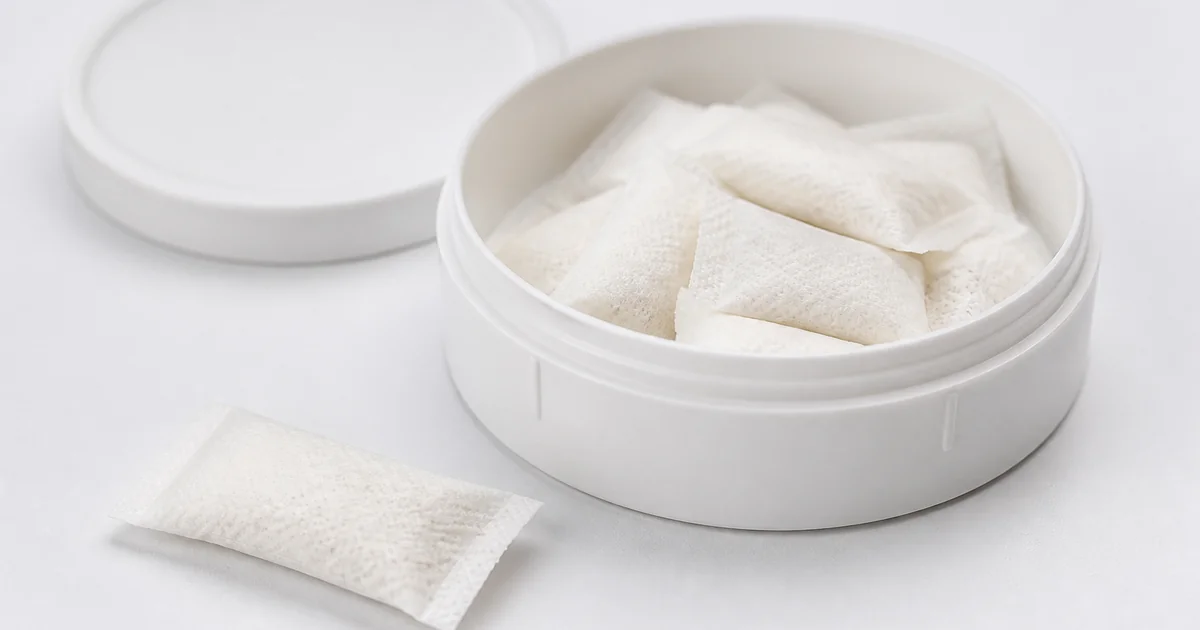
You are about to place a pouch under your lip, the same motion you have made hundreds of times. But today something makes you pause. You pick up the can and squint at the tiny printed text on the back. The ingredient list is there, smaller than you would like, but readable if you tilt it toward the light. You realize you have never actually read it. Not once. You know there is nicotine, obviously, but what else is in this thing you put in your mouth every day? This guide walks through the complete ingredient breakdown, what each component actually does, and what it means for someone comparing ZYN to other products they use.
The Main Active Ingredient: Nicotine Salt
The primary active ingredient in every ZYN pouch is pharmaceutical-grade nicotine salt, specifically nicotine bitartrate dihydrate. This is the compound that delivers the effect users are seeking. Unlike the freebase nicotine found in cigarettes, nicotine salts are formulated to be smoother and less harsh on the throat and oral tissues.
ZYN pouches come in two standard strengths: 3mg and 6mg of nicotine per pouch. This refers to the total nicotine content, not the amount absorbed by your body. Actual absorption varies based on individual physiology, how long you keep the pouch in place, and where you position it in your mouth. The nicotine salt form allows for efficient absorption through the oral mucosa, the thin tissue lining your gums and inner cheeks.
The Filler: Microcrystalline Cellulose
The bulk of what you feel when you handle a ZYN pouch is microcrystalline cellulose. This is a plant-derived fiber that serves as the primary filler and carrier material. It gives the pouch its physical structure and bulk.
Microcrystalline cellulose is widely used in the pharmaceutical and food industries. It appears in tablets as a binder, in food products as an anti-caking agent, and in various cosmetic applications. It is derived from wood pulp or other plant fibers that have been processed into a fine powder. In ZYN pouches, it serves as the matrix that holds the nicotine and other ingredients in place while allowing moisture and nicotine to release gradually when the pouch is in use.
The pH Adjusters: Sodium Carbonate and Sodium Bicarbonate
Two related compounds appear in the ingredient list: sodium carbonate and sodium bicarbonate. These are pH adjusters, and their role is critical to how the product works.
Nicotine absorption through oral tissue depends heavily on pH. In an acidic environment, nicotine molecules bind with hydrogen ions and become less absorbable. In an alkaline environment, nicotine remains in its freebase form, which passes more easily through biological membranes. Sodium carbonate and sodium bicarbonate raise the pH of the pouch, creating conditions that favor nicotine absorption.
Sodium bicarbonate is familiar as baking soda. Sodium carbonate, also known as soda ash or washing soda, is a stronger base. Together they create the alkaline environment that makes the nicotine in the pouch bioavailable. Without these adjusters, the nicotine would be present but poorly absorbed.
The Stabilizer: Hydroxypropyl Cellulose
Hydroxypropyl cellulose is a plant-based binding agent and stabilizer. It is derived from cellulose, the structural component of plant cell walls, that has been chemically modified to make it more soluble and functional as an additive.
In ZYN pouches, hydroxypropyl cellulose serves multiple purposes. It helps bind the ingredients together so the pouch maintains its structure during handling and use. It also contributes to the texture and mouthfeel of the pouch. As a food-grade additive, it appears in various processed foods, pharmaceuticals, and cosmetic products. It is generally recognized as safe for consumption and has no nutritional value, passing through the digestive system without being absorbed.
The Sweeteners: Acesulfame Potassium and Sucralose
ZYN pouches contain two artificial sweeteners: acesulfame potassium and sucralose. Neither is sugar. Both are high-intensity sweeteners that provide sweetness without calories or impact on blood glucose.
Acesulfame potassium, often listed as acesulfame K or Ace-K, is a calorie-free sweetener approximately 200 times sweeter than sugar. It is heat-stable and commonly used in beverages, baked goods, and other processed foods. It passes through the body without being metabolized, meaning it provides no energy and has no effect on blood sugar.
Sucralose is derived from sugar through a multi-step chemical process that substitutes three hydrogen-oxygen groups on the sugar molecule with three chlorine atoms. The result is a sweetener approximately 600 times sweeter than sugar that is not recognized by the body as a carbohydrate. Like acesulfame potassium, it passes through without being metabolized.
The combination of these two sweeteners allows ZYN to achieve a pleasant taste profile without the calories, blood sugar impact, or dental concerns associated with sugar.
The Flavorings: Natural and Artificial
The ingredient list includes "natural and artificial flavors" without specifying exactly what those flavors are. This is standard practice in the food and consumer product industries, where flavor formulations are often proprietary trade secrets.
Natural flavors are derived from plant or animal sources through physical or enzymatic processes. Artificial flavors are synthesized chemically to mimic natural flavors or create entirely new taste experiences. In ZYN pouches, these flavorings create the mint, citrus, coffee, and other varieties available.
ZYN does not disclose the specific flavor compounds used in each variety. This lack of transparency is common in the industry but means users cannot know exactly which molecules they are being exposed to beyond the general categories listed.
Sugar and Calories: The Simple Answer
ZYN contains zero grams of sugar per pouch. The sweetness comes entirely from artificial sweeteners, not carbohydrates. This means ZYN has negligible calories, effectively zero for practical purposes.
For people monitoring their sugar intake, managing diabetes, or following low-carbohydrate diets, this is a relevant distinction. Unlike many consumable products, ZYN does not contribute to daily caloric intake or blood glucose levels. The absence of sugar also means no risk of dental cavities from sugar exposure, though other oral health considerations from nicotine pouch use still apply.
The Pouch Material: An Honest Note
The physical pouch that holds all these ingredients is itself a component, and its composition deserves honest discussion. The exact material makeup of the pouch fiber has been a subject of open regulatory scrutiny. Questions have been raised about whether the material contains substances that should be disclosed or regulated differently.
Rather than restate those concerns in detail here, readers interested in the full story should see our dedicated post on ZYN microplastics and the FDA controversy. That article covers the regulatory questions, what is known and unknown about the pouch material, and why this matters for consumers.
What can be said here is that the pouch material is designed to be inert and non-reactive during use. It holds the ingredients together while allowing moisture and nicotine to release. After use, the pouch should be disposed of properly and not swallowed.
What This Means Practically
Understanding the ingredient list helps place ZYN in context compared to other products people regularly consume. The ingredients are largely familiar from other contexts. Microcrystalline cellulose and hydroxypropyl cellulose appear in medications and processed foods. Sodium bicarbonate is in your kitchen. Acesulfame potassium and sucralose are in countless diet beverages and sugar-free products.
The unique aspect is the combination and the delivery mechanism. Nicotine is the active drug, and the other ingredients are there to make it palatable, stable, and absorbable. The pH adjusters ensure the nicotine works. The sweeteners make it taste acceptable. The fillers give it physical form.
For someone comparing ZYN to cigarettes, the ingredient list is notably shorter and lacks the combustion byproducts that make smoking so harmful. For someone comparing ZYN to nicotine gum or patches, the ingredients are broadly similar, though the delivery mechanism differs. For someone comparing ZYN to nothing at all, the question is whether the risks of nicotine use are worth the effects it provides.
Frequently Asked Questions
What are the main ingredients in ZYN?
The main ingredients are pharmaceutical-grade nicotine salt (nicotine bitartrate dihydrate), microcrystalline cellulose as a filler, sodium carbonate and sodium bicarbonate as pH adjusters, hydroxypropyl cellulose as a stabilizer, acesulfame potassium and sucralose as artificial sweeteners, and natural and artificial flavors.
Does ZYN contain sugar?
No. ZYN contains zero grams of sugar per pouch. Sweetness comes from artificial sweeteners (acesulfame potassium and sucralose), not sugar.
How many calories are in a ZYN pouch?
ZYN has negligible calories per pouch, effectively zero for practical purposes. The ingredients are not metabolized for energy.
What is the nicotine strength in ZYN?
ZYN comes in 3mg and 6mg strengths per pouch, referring to the total nicotine content. Actual absorption varies by individual and usage pattern.
What is microcrystalline cellulose?
Microcrystalline cellulose is a plant-derived fiber used as the primary filler in ZYN pouches. It is widely used in pharmaceuticals and food products as a binder and anti-caking agent.
Why does ZYN contain sodium bicarbonate?
Sodium bicarbonate and sodium carbonate are pH adjusters. They create an alkaline environment that helps nicotine absorb through oral tissue more efficiently.
Are the artificial sweeteners in ZYN safe?
Acesulfame potassium and sucralose are both approved for use in food and beverages by regulatory agencies. They pass through the body without being metabolized and do not affect blood sugar.
Does ZYN disclose what specific flavor compounds are used?
No. ZYN lists "natural and artificial flavors" generically without disclosing specific flavor compounds. This is standard industry practice for proprietary flavor formulations.
The Bottom Line
Reading the ingredient list on a ZYN can reveals a product built around a simple goal: delivering nicotine in a palatable, stable, and efficient form. The ingredients are largely familiar from other consumer products, combined in a specific way to achieve that goal. There is no sugar, negligible calories, and a short list of functional components each serving a specific purpose.
Whether that ingredient list represents something you want to put in your body regularly is a personal decision. Understanding what is actually in the pouch, beyond the vague category of "nicotine product," allows that decision to be informed rather than automatic. For more on how ZYN might affect blood sugar and metabolic health, see our guide on ZYN and blood sugar. If you are ready to quit nicotine pouches entirely, download PouchOut for structured support, progress tracking, and a proven path to becoming nicotine-free.