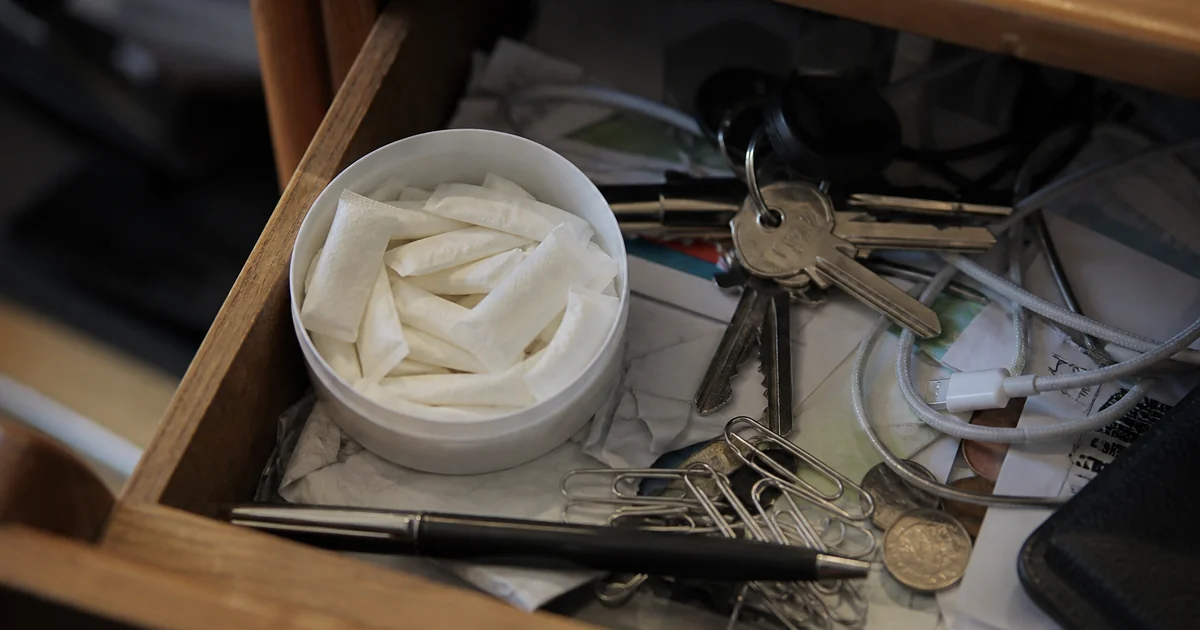
You are digging through a jacket pocket or the back of a junk drawer and your fingers hit something familiar. A round can, slightly dusty, that familiar weight in your palm. You flip it over and squint at the small printed date on the bottom. It was months ago, maybe a year. You have no idea what that date actually means. Is it like milk, where past the date means spoiled? Or more like canned goods, where the date is just a suggestion? You are trying to quit, or maybe you already have, and now you are staring at this forgotten can wondering if you should use it up or just throw it out.
The date printed on a ZYN can is a best-before date, not an expiration date. Nicotine pouches do not spoil or grow harmful bacteria like food does. Over time, the nicotine potency gradually declines, flavor compounds break down and taste duller, and the pouch material can dry out. Heat and sunlight accelerate these changes dramatically. An old pouch is not dangerous to use, but it may deliver weaker nicotine and less satisfying flavor. For someone trying to quit, disposing of old stock can be a symbolic and practical step forward.
What the Printed Date Actually Means
That small date stamped on the bottom of your ZYN can is a best-before date, which is fundamentally different from an expiration date. Food products often have expiration dates because they can actually spoil, grow bacteria, or become unsafe to consume. Nicotine pouches do not work this way.
A best-before date is a manufacturer's estimate of how long the product will maintain its intended quality when stored properly. It is a guideline for peak experience, not a safety cutoff. The pouch will not turn toxic the day after the printed date passes. It will not grow mold or develop harmful pathogens. The date simply indicates when the manufacturer expects the nicotine potency, flavor profile, and physical texture to begin noticeably degrading.
This distinction matters because many people treat all dates the same way. They see a past date and assume the product is ruined or unsafe. With nicotine pouches, the reality is more nuanced. The product degrades gradually, and the date is simply a marker on that continuum. Using a pouch a month past its best-before date is not the same as drinking spoiled milk. It is more like eating cereal that has lost some of its crunch. The experience suffers, but the safety does not.
What Actually Changes as a Pouch Ages
As nicotine pouches sit in storage, three main things happen slowly over time. None of them make the pouch dangerous, but all of them affect the experience of using it.
First, nicotine potency gradually declines. Nicotine is a relatively stable compound, but it is not completely inert. Over months of storage, some degradation occurs. The pouch that once delivered a solid hit might feel noticeably weaker. For someone who uses pouches specifically for the nicotine effect, this gradual weakening can be frustrating. You might find yourself using more pouches to get the same effect, or feeling unsatisfied with the experience.
Second, flavor compounds break down. The mint, citrus, coffee, or other flavorings in nicotine pouches are volatile organic compounds. They evaporate and degrade over time, especially if the can has been opened. A fresh pouch has bright, distinct flavor. An old pouch often tastes dull, flat, or slightly off. The flavor might seem muted, or it might have developed a stale, papery quality that is unpleasant.
Third, the pouch itself can dry out. Nicotine pouches contain moisture that helps them feel comfortable under the lip and aids in nicotine release. As a can sits, especially if it has been opened or stored in dry conditions, that moisture evaporates. The pouch becomes stiff, scratchy, and less pleasant to use. A dry pouch can feel irritating against gum tissue and may not release nicotine as smoothly.
These changes happen gradually. A pouch that is a month past its best-before date might be nearly indistinguishable from a fresh one. A pouch that is a year past might be noticeably weaker, duller, and drier. The timeline depends heavily on storage conditions.
Why Heat and Improper Storage Accelerate Degradation
Storage conditions matter enormously for nicotine pouch longevity. The printed best-before date assumes the product has been stored at room temperature in a cool, dry place away from direct sunlight. Reality is often different, and real-world storage can dramatically shorten usable shelf life.
Heat is the biggest enemy of nicotine stability. Leaving a can in a hot car, near a radiator, or in direct sunlight for extended periods speeds up chemical degradation. The nicotine breaks down faster. The flavor compounds evaporate more quickly. The pouch material can become brittle or discolored. A can that sat in a glove box through a summer might be effectively aged years in terms of quality loss.
Sunlight also causes problems. UV radiation degrades organic compounds, including nicotine and flavorings. A can left on a sunny windowsill will degrade faster than one stored in a drawer. The packaging itself might protect somewhat, but clear or lightly colored cans offer less protection than opaque ones.
Moisture is another factor. While pouches need some internal moisture to function, external humidity can cause problems. In very humid environments, unsealed cans might absorb moisture from the air, leading to clumping, mold growth on the exterior, or changes in the pouch texture. In very dry environments, the pouches lose moisture faster and become brittle.
The ideal storage is simple: room temperature, away from heat sources, out of direct sunlight, and in a dry place. A drawer, cabinet, or closet works well. The glove box, windowsill, or bathroom counter near a hot shower does not.
Why Expired Pouches Are Not Dangerous, Just Less Satisfying
If you use a pouch that is past its best-before date, nothing dangerous happens. You will not get sick. You will not experience toxic effects. The pouch is not contaminated or harmful. It is simply a lower-quality version of itself.
The main consequence is disappointment. The nicotine hit might feel weaker than expected. The flavor might taste stale or off. The texture might be dry and uncomfortable. You might find yourself using the pouch for longer to try to extract more nicotine, or discarding it early because the experience is unsatisfying.
For someone who is not particularly sensitive to nicotine strength or flavor nuance, an older pouch might still be perfectly usable. For someone who has specific preferences or who relies on consistent nicotine delivery, the degradation might make the pouch not worth using.
The key point is that this is a quality tradeoff, not a health risk. You are free to make your own judgment about whether a slightly degraded pouch is worth using or whether you would rather open a fresh can. There is no safety imperative forcing you to discard old pouches immediately.
What to Actually Do With Old Pouches
If you find yourself with old nicotine pouches, here is a practical framework for deciding what to do with them.
First, check the printed best-before date on the bottom of the can. This gives you a baseline for how old the product is. Remember that this is a quality guideline, not a safety deadline.
Second, consider how the can was stored. If it sat in a cool drawer, the pouches are likely in decent shape even if the date has passed. If it baked in a car or sat in direct sunlight, the quality loss is probably more severe than the date suggests.
Third, use your senses. Open the can and smell the pouches. Fresh pouches have a distinct, sharp aroma. Stale pouches smell faint, off, or papery. If you decide to try one, pay attention to the texture under your lip and the flavor. If it feels dry, tastes dull, or delivers weak nicotine, you have your answer about quality.
Fourth, make a decision based on your goals. If you are actively using nicotine pouches and the old stock seems acceptable, you might use it up. If you are trying to quit, consider whether keeping old stock around is helpful or harmful. Some people find that having pouches available makes quitting harder. Others like knowing they have an emergency supply. Be honest with yourself about which category you fall into.
Fifth, if you are quitting, consider disposal as a symbolic act. Throwing away unopened or partially used cans can be a concrete step that reinforces your commitment. It removes temptation and eliminates the mental burden of deciding what to do with old stock. The financial loss is usually small compared to the ongoing cost of using, and the psychological benefit of a clean break can be significant.
The Bottom Line
Finding an old can of ZYN in a drawer is a common experience. The date on the bottom is a quality guideline, not a safety warning. Old pouches gradually lose nicotine potency, flavor, and moisture, but they do not become dangerous. Heat and poor storage accelerate these changes far more than time alone.
Whether to use old stock or discard it depends on your personal preferences and your goals. If you are trying to quit, getting rid of old pouches can be a meaningful step. If you are continuing to use, trust your senses to judge whether the quality is acceptable. The date is a suggestion, not a rule.
For more on choosing the right nicotine strength and understanding your usage, see our guides on nicotine pouch strength and how much ZYN is too much. If you are ready to quit, download PouchOut for structured support, progress tracking, and a proven path to becoming nicotine-free.